
Recurring drought, rising demand for food and energy, and the need to sustain rural livelihoods put pressure on Morocco's future. Meeting these needs depends on treating renewable power, careful water use and resilient agriculture as connected priorities, rather than separate fixes.
The Green Morocco Plan was an agricultural programme; later strategies, including Generation Green, address related goals but are not one single plan. For eco-conscious travellers, understanding this distinction helps put local initiatives in context, including sustainable travel in Morocco. The first step is to separate these policy strands and see how they relate.
How Morocco's Green Plan links renewable energy, water efficiency and sustainable agriculture
Morocco's agricultural strategy sits alongside wider renewable-energy and water policies, rather than forming one fully integrated programme. Their goals meet on farms, where choices about crops, irrigation and power affect both rural livelihoods and pressure on natural resources.

From the Green Morocco Plan to Generation Green
The Green Morocco Plan ran from 2008 to 2020. It sought to modernise agriculture, raise productivity and expand higher-value production, while also supporting smaller farms through solidarity-based projects. That balance mattered: investment in commercial farming could increase output, but rural employment, smaller producers and the resources farms depend on also needed attention.
Generation Green, launched for 2020–2030, shifts more emphasis towards people and the organisation of the sector. Its priorities include strengthening the position of young farmers, developing agricultural organisations and improving value chains so producers can gain more from what they grow. These are policy aims, not proof that the targets have already been met. The World Bank overview of Morocco's Green Generation strategy describes support for more rewarding farming and sustainable agriculture.
For rural communities, the distinction is practical. Better market access or cooperative organisation can help local producers retain more value, while training and finance can make farming more attractive to younger people. Yet these benefits depend on implementation, including whether smaller farms can take part.
Why joined-up planning matters in a water-stressed country
Irrigation depends on energy to lift, move and distribute water. Solar pumping can reduce reliance on fossil-fuel electricity and help manage operating costs, but cheaper power can also encourage more pumping if groundwater limits and crop demand are not managed. Meanwhile, a switch to water-intensive crops can raise total demand, even when farms use efficient drip systems.
Research on Moroccan agricultural water policy has highlighted this tension: drip irrigation can improve water efficiency on individual plots, yet wider changes in production may increase water use overall. The study of Moroccan agricultural water management helps explain why efficiency measures need to sit alongside water accounting and decisions about what gets planted.
Crop choice, soil conditions, irrigation design and energy supply therefore need to be considered together. Otherwise, a project may cut emissions but strain aquifers, or save water per hectare while expanding irrigated land. Practical learning through water-wise permaculture and farming workshops can also help visitors understand how these choices shape rural livelihoods.
How renewable energy can support farms and rural communities
Morocco has strong solar and wind resources, and its national ambition is for renewables to make up 52% of installed electricity capacity by 2030. That target does not mean every farm will run on renewable power: rural access depends on grid connections, equipment costs and local infrastructure. The Noor Ouarzazate complex shows the scale of national solar investment, but farm-level benefits require practical planning.
Solar power for irrigation, processing and cold storage
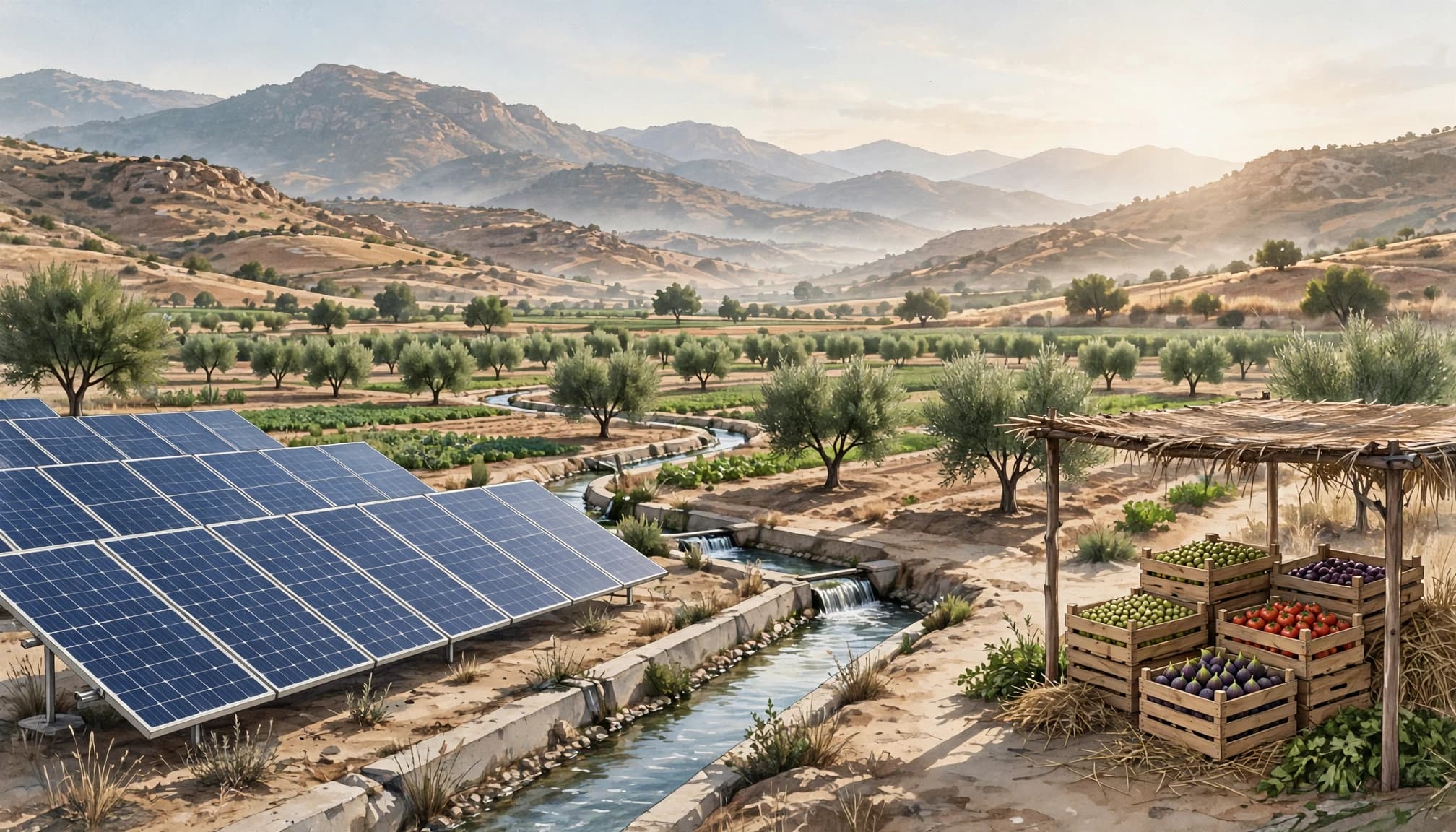
On a farm, solar electricity can run water pumps, cool harvested produce and power equipment for cleaning, drying or processing crops. Cold storage can help preserve quality while growers arrange transport or reach buyers. The Noor Ouarzazate solar complex is a prominent national example, although large power stations and small farm systems meet different needs.
Solar pumping may reduce exposure to fuel prices or unreliable electricity, yet panels, pumps, batteries and installation require upfront investment. Grid access can provide backup, while storage adds cost and needs maintenance. Farms also need access to technicians and spare parts, particularly in remote areas. Solar energy in sustainable farming depends on equipment that can be maintained over time, not simply installed.
Most importantly, cheaper pumping can increase groundwater extraction if farmers pump without limits. Solar power should therefore sit alongside reliable information on water availability, suitable crop choices and clear pumping rules. Energy savings cannot compensate for drawing water faster than an aquifer can recover.
Making renewable projects useful to local people
A renewable project brings wider rural benefits when local people have a meaningful role in its ownership, operation or decision-making. Community participation can shape where infrastructure goes and how benefits are shared. Training local workers to install and service equipment can also keep skills and employment in the area.
However, small farms may struggle to finance individual systems or negotiate access to shared infrastructure. Cooperatives, shared services and fair financing can help spread costs, provided their rules give smaller producers a real voice. Morocco's Toudarte Cooperative, where more than 100 Amazighe women take part in argan-oil production and receive support including literacy classes, illustrates how collective enterprise can connect livelihoods with local participation. It is not a renewable-energy project, but it shows why community benefit depends on who takes part and who gains.
Morocco's renewable-energy expansion and local communities raises a useful question for farm projects: do nearby households gain reliable energy, paid work or practical training? Clear answers help distinguish local benefit from infrastructure built nearby without local influence.
How water efficiency can make Moroccan farming more resilient
In Morocco, repeated drought and limited freshwater make each irrigation decision matter. Efficient water use can help farms manage dry spells, but lasting gains depend on how water is managed across the wider catchment.
Using less water without losing sight of the whole basin
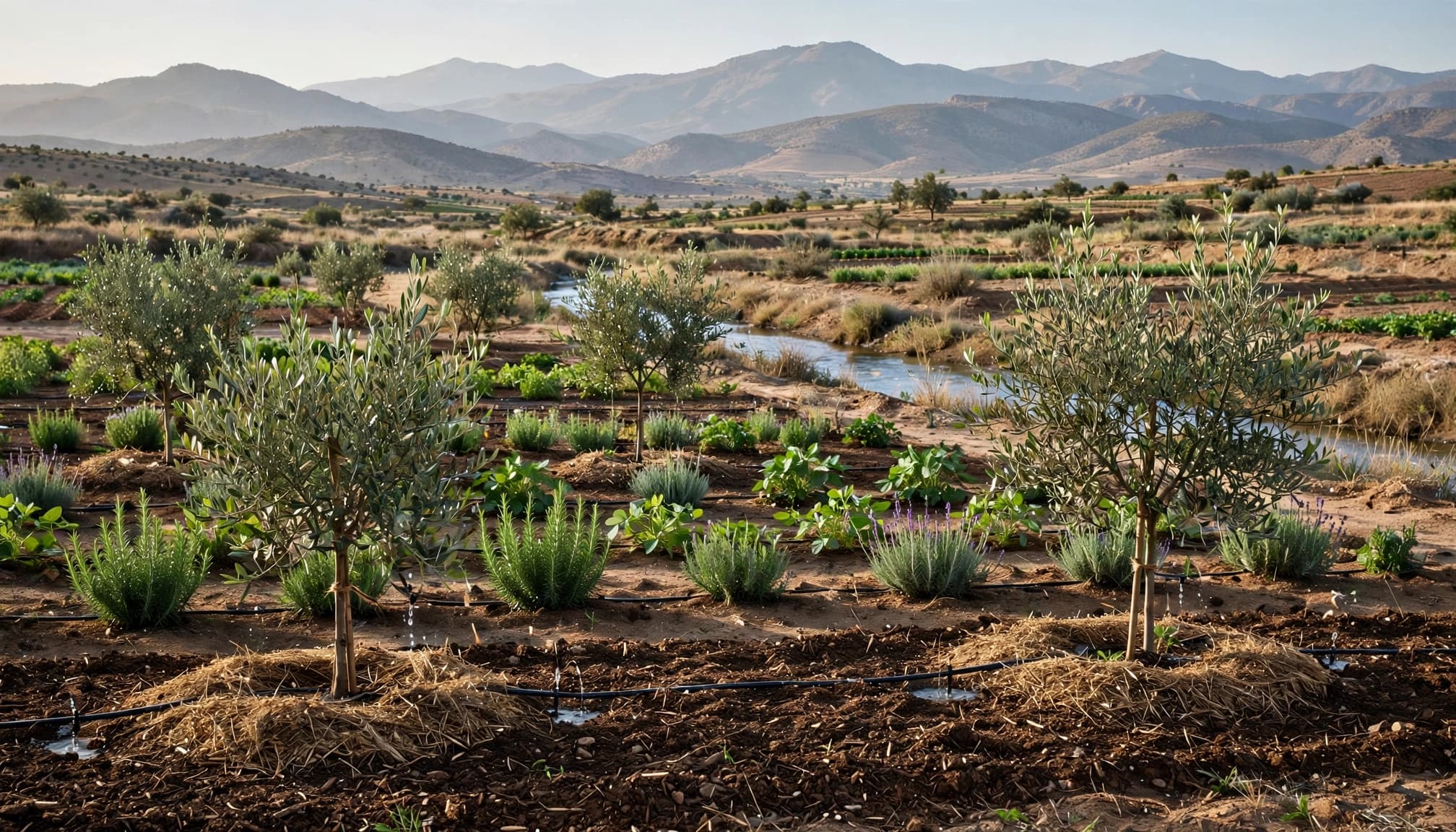
Drip irrigation delivers water close to crop roots, reducing evaporation and limiting water applied where it is not needed. Soil-moisture monitoring can help farmers time irrigation to actual field conditions rather than relying on a fixed schedule. Yet a more efficient plot does not automatically mean less water is taken from a river or aquifer.
Some water that seeps or drains from fields may return to groundwater or flow downstream. If farmers use efficiency gains to expand irrigated land or grow thirstier crops, total extraction can rise. The FAO analysis of improved irrigation technology explains why technology alone cannot guarantee water savings.
Basin-wide accounting helps track withdrawals, return flows and available supplies. Clear limits on extraction matter too, especially where groundwater levels are falling. Regular maintenance also keeps pipes, filters and emitters working properly, so leaks or blockages do not waste water or leave crops short. These practical measures support ecotourism's environmental and social goals, which include protecting natural resources such as water and soil.
Protecting soil and crops through dry years
Healthy soil holds moisture for longer. Mulching slows evaporation, whilst compost adds organic matter that can improve soil structure. Crop rotation supports soil health, and agroforestry can provide shade and reduce exposure to hot, dry winds. Together, these practices may help crops cope with heat, although none can remove drought risk.
Farmers can also choose drought-tolerant varieties and match crops to local water availability. Rainwater capture may provide a modest reserve for suitable uses, while treated wastewater can supplement irrigation where treatment standards, crop type and local rules make it safe. Each option needs to fit the farm and its water supply.
These measures work best as part of a plan that protects both harvests and the water source. A field may use less water per crop, but lasting security depends on keeping total withdrawals within what the basin or aquifer can sustain.
What sustainable agriculture looks like on the ground in Morocco
Sustainable agriculture in Morocco depends on more than efficient irrigation. It takes shape through daily decisions about soil, crop choice and how much value stays in rural communities. Access to training, finance, land and suitable equipment can determine whether greener practices are realistic for small farms.
Supporting small farms, women and young growers
Practices such as composting, mulching and rotating crops can help protect soil and retain moisture. Farmers may also reduce reliance on chemical inputs where soil conditions, pest pressure and crop needs allow. Yet these changes often require advice, labour or equipment before they bring benefits. Without affordable finance, secure access to land and dependable markets, a grower may have little room to test a different approach.
Farmer organisations and cooperatives can make that shift more practical. Members can share training, arrange access to equipment and combine produce for sale. By negotiating together, small growers may also improve their position with buyers, although fair participation depends on transparent decisions and a real voice for women and younger members.
Keeping value and biodiversity in rural areas
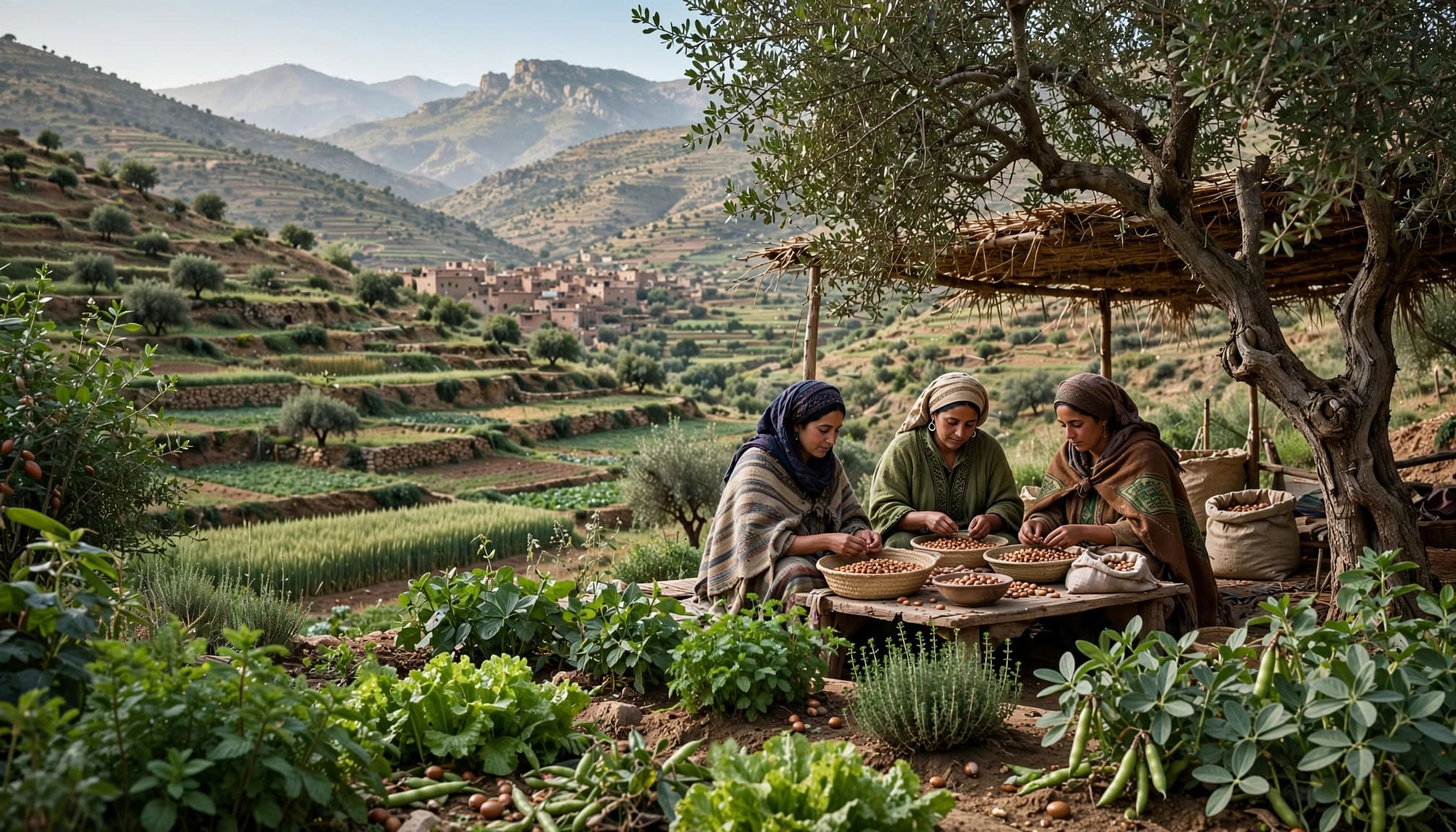
Local processing can help keep more value near the farm. Cleaning, drying or pressing produce before sale may open routes to buyers and reduce dependence on selling unprocessed crops at harvest time. Argan oil offers one example of community-based production: the Toudarte Cooperative reports that more than 100 Amazighe women take part, with benefits including steady income, literacy classes and medical care. This is an example of a cooperative's work, not evidence of a direct outcome of the Green Morocco Plan.
A rural economy built around several products can give growers more options than reliance on a narrow crop mix. Morocco's plant diversity includes wild relatives of cultivated crops, a resource explored in research on Morocco's crop wild relatives. That does not mean every farm should grow more varieties; local water supplies, soils and market demand must guide decisions.
Visitors can support rural livelihoods by buying directly from producers when possible and asking how goods are made and who benefits. Choosing locally run experiences can also keep spending in the area, as described in these examples of ecotourism supporting local jobs.
What Morocco needs to make its green transition last
Morocco's green transition will last only if renewable energy, water management and farming policy work together in practice. Drought raises the stakes, while the cost of equipment, uneven access for smallholders and weak coordination can leave benefits out of reach. The World Bank's assessment of drought and agricultural resilience in Morocco highlights the pressure water scarcity places on farming.
Turning targets into fair, measurable results
Announced targets describe intentions; they do not show whether farms or communities are better off. Clear baselines and transparent reporting can show what changes over time, who benefits and where programmes fall short. Reports should distinguish installed solar capacity or irrigation equipment from outcomes such as reliable clean power, water withdrawals, soil health, farm income and rural participation.
That distinction matters because a measure can produce unintended effects. Solar pumps may lower energy costs, for example, but also encourage more groundwater use without effective limits. Drip irrigation can reduce water applied to a field, yet total withdrawals may still rise if irrigated areas expand. Monitoring should therefore cover the wider basin, not just individual farms, and programmes should change when evidence reveals harm.
Coordination between water, agriculture and energy agencies is essential. So are maintenance plans, access to technicians and financing that smaller producers can afford. Without these, equipment may fail or remain concentrated among larger farms, while rural communities bear the costs of resource pressure without sharing the gains.
Choosing credible images of farms and communities
Visuals should show real places and people, not present an idealised version of progress. Suitable editorial or documentary photographs could feature a Moroccan solar-powered farm, working drip-irrigation lines, farmers tending crops or a cooperative processing argan. Each image should have an accurate caption that identifies the place and activity where known, and photographers should secure appropriate permission from people shown.
All visual assets should look like authentic documentary or editorial news photographs. AI-generated images, composites, staged fantasy-style scenes and misleading illustrations should be excluded, especially where they could imply that a project exists or has achieved results it has not.
For responsible travellers, locally rooted experiences and products can help direct spending towards community businesses and producers. Guidance on choosing a sustainable travel agency can help visitors look for local hiring and suppliers. Tourism cannot resolve water governance or fund the whole transition, but informed choices can support livelihoods connected to the places visitors come to see.
FAQ
Morocco's Green Morocco Plan is often discussed alongside renewable energy and water policy, although these initiatives are separate. These answers clarify how they connect, and what responsible travellers can take from them.
Was the Green Morocco Plan an energy and water programme?
No. The Green Morocco Plan ran from 2008 to 2020 and focused on agriculture. Morocco's energy and water policies developed separately, but their effects meet on farms. Irrigation needs power, and crop choices influence how much water is required. Generation Green, launched for 2020–2030, is a later agricultural strategy with a stronger focus on farmers, young people and value chains.
Can solar-powered irrigation save water?
Solar pumps can lower the cost of pumping, but they do not automatically reduce water use. If cheaper energy encourages more groundwater extraction, pressure on aquifers may increase. Effective water limits, monitoring and crop choices suited to local supplies are therefore just as important as efficient irrigation equipment. The World Bank's overview of drought management in Morocco explains the wider challenge of managing drought and climate variability.
How can travellers support local farming communities?
Travellers can buy local products directly from producers and choose community-run experiences where benefits stay in the area. For example, Toudarte Cooperative produces argan oil, with more than 100 Amazighe women involved in its work. The cooperative also provides members with income, literacy classes and medical care. Asking who made a product and how it was produced helps visitors make more informed choices.
Does efficient irrigation guarantee sustainable farming?
No. Drip irrigation can reduce water applied on an individual plot, yet overall withdrawals may still rise if farms expand irrigated areas or switch to thirstier crops. Sustainable farming also depends on soil care, water accounting and decisions that fit local conditions. Readers who have encountered community-led or water-conscious projects in Morocco can share their experiences in the comments.
Conclusion
Morocco's transition will be strongest when renewable energy supports responsible water use and resilient agriculture, with local people sharing in the benefits. Solar power can help farms meet energy needs, but lasting progress also depends on managing water within local limits and making practical support accessible to smaller producers.
For travellers, buying from local producers and choosing community-rooted experiences can help sustain rural livelihoods. Each choice can favour a form of tourism that respects nature and the people who care for it.