
Authentic Moroccan Argan, Rare Oil With an Eco-Tourism Story
In south-west Morocco, twisted argan trees rise from dry earth that looks almost too harsh for life. Salt air drifts in from the Atlantic, the sun beats down, and yet these old trees keep growing, year after year.
That harsh beauty explains why authentic Moroccan argan feels so special. You don't find its natural home scattered across continents. You find it in one narrow part of Morocco, where nature, culture, and daily work still meet in a direct way.
For travellers who care about sustainable travel, nature conservation, and local livelihoods, argan tells a richer story than a beauty label ever could. It begins with place.
Why Moroccan argan is unlike anything else in the world
Argan oil has global fame, but its roots are unusually local. The argan tree, Argania spinosa, grows naturally in south-west Morocco, especially around Souss-Massa and neighbouring areas near Agadir, Taroudant, and Essaouira. That limited home makes the oil rare before a single bottle is filled.
Its appeal comes from more than rarity. The tree has adapted to heat, low rainfall, poor soil, and strong wind. Because of that, the oil carries the mark of a single region in the way a fine olive oil or wine carries the mark of its ground and climate.
The single place that gives argan its character
The argan zone sits between coast and inland plain, with mountain influence close by. Days can be hot, rain can be scarce, and the soil often looks worn and stony. Yet the trees hold on, with deep roots and hard, small leaves that help them cope.
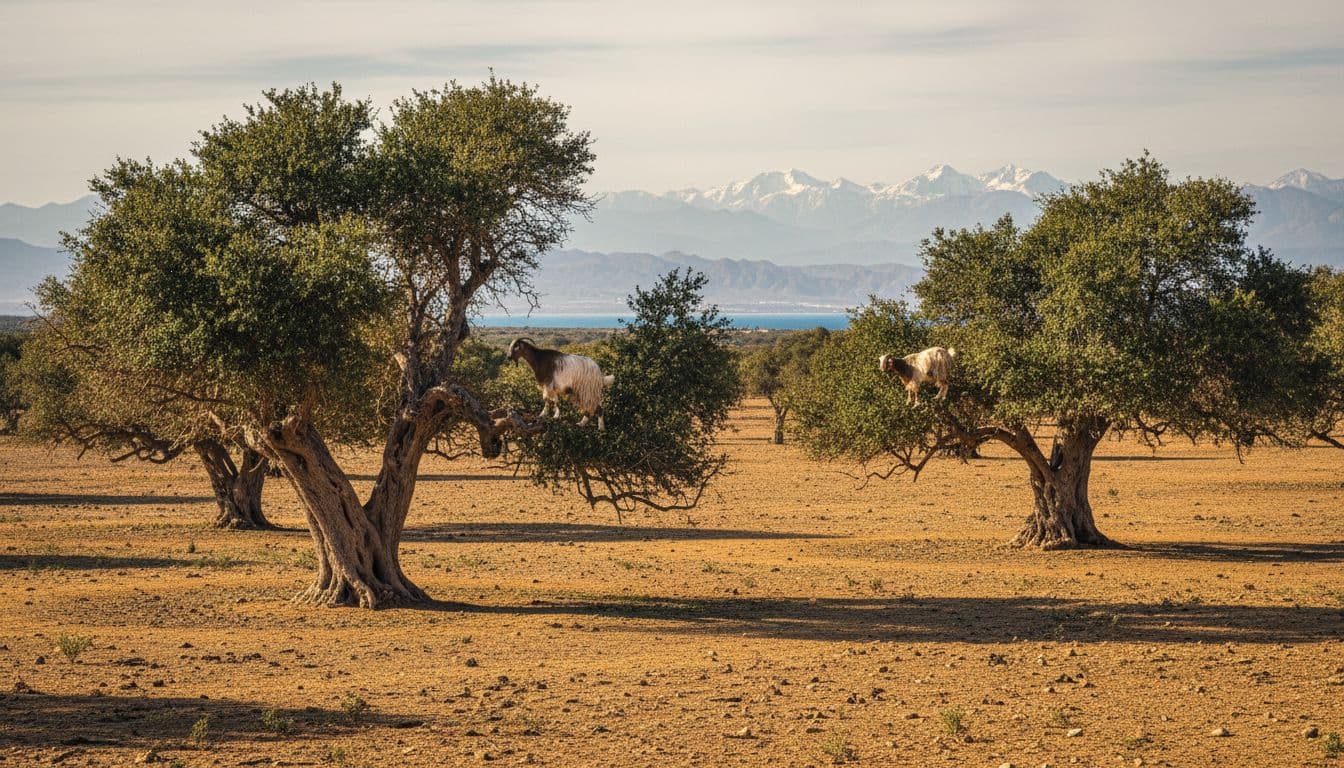
Because the species is native to this one part of Morocco, real argan oil can't be detached from its origin. UNESCO's record of argan know-how also ties the product to the Arganeraie in south-west Morocco, where the tree and the cultural practices around it belong together.
How argan supports the land as well as the people
These trees do useful work above and below the soil. Their roots help hold loose ground in place, so wind and runoff strip away less earth. That matters in semi-arid areas, where erosion can turn a bad season into long damage.
The groves also give cover and food to local life, from insects and birds to grazing animals. In other words, argan is part of a living system, not a crop grown in isolation. That is why the tree matters to eco tourism and responsible travel. When visitors see the groves with care, they begin to see conservation as a local daily practice, not an abstract cause.
From nut to oil, the traditional craft that keeps the story alive
Argan oil takes time, strength, and patience. According to current industry reporting in 2026, it can take more than 30 kilograms of fruit to produce one litre of oil. That alone explains why cheap "argan" often deserves suspicion.
The process is slow. Fruit is gathered, dried, and pulped. Then the hard nut is cracked by hand to reach the kernels inside. For culinary oil, the kernels are lightly roasted first. For cosmetic oil, they are usually left unroasted. After that, the kernels are ground and pressed.
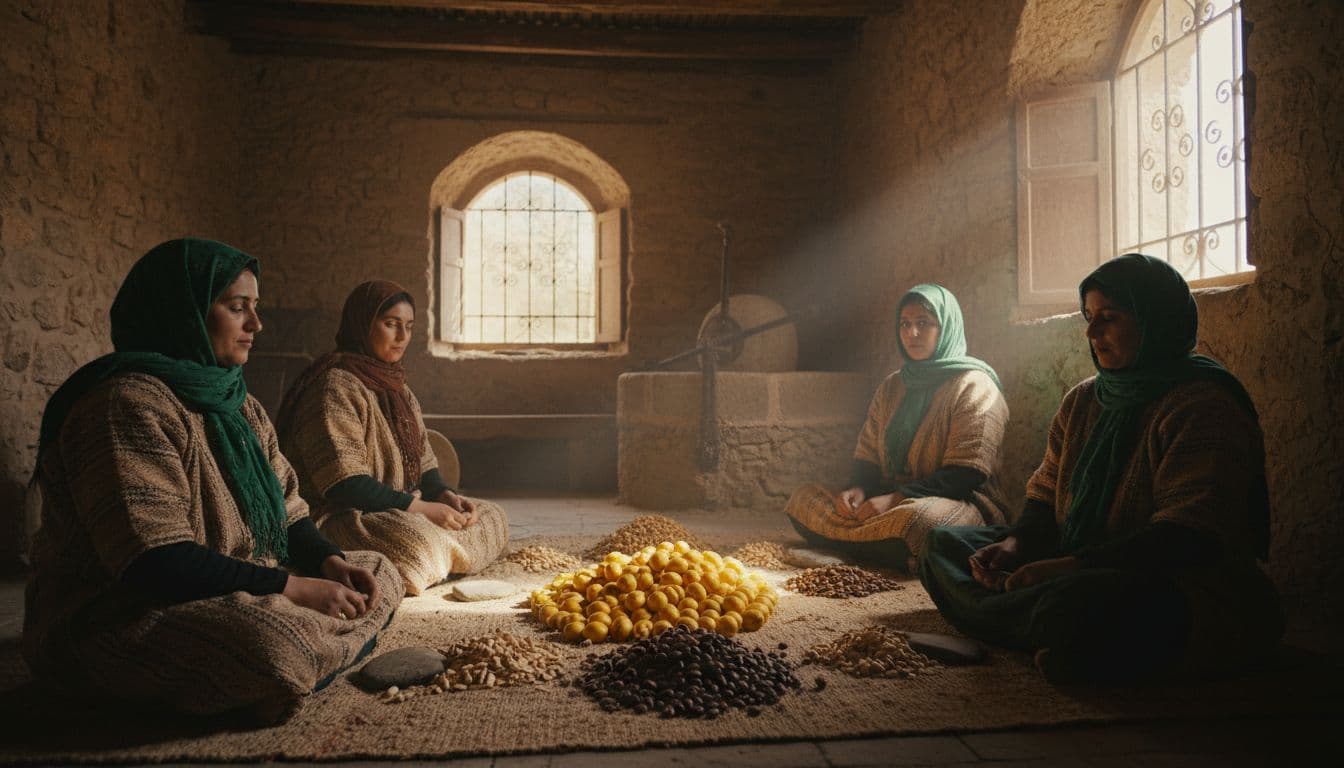
This method is part of living heritage, not museum theatre. UNESCO notes that argan knowledge includes harvesting, drying, grinding, milling, mixing, and the making of tools used in the work. Each stage affects flavour, scent, texture, and yield.
Why women's cooperatives matter so much
Many of the people behind this work are Amazigh women organised in cooperatives. Their labour built the modern argan trade, yet the best cooperatives offer more than wages. They create steadier income, shared bargaining power, and a stronger public role for women in village life.
The Toudarte Cooperative gives a clear example of that model. More than 100 Amazigh women take part, and the benefits reach beyond oil production. The co-op supports literacy learning, access to medical care, and more secure work. That changes households as well as balance sheets.
When you buy genuine argan from a fair cooperative, you're also backing education, health, and local independence.
What real argan oil looks, smells, and feels like
A pure bottle should keep things simple. The ingredient list for cosmetic oil is often just argan kernel oil, with no long chain of fillers. The oil should feel rich but not sticky, and it shouldn't sit on the skin like syrup.
Scent gives another clue. Culinary argan oil has a warm, nutty aroma because the kernels are roasted. Cosmetic argan oil is much milder. It may smell faintly nutty or earthy, but it shouldn't smell strongly perfumed unless something has been added. Dark glass, clear origin details, and proper batch information also help.
The eco-tourism side of argan, where travel meets conservation
Argan country suits low-impact travel better than mass tourism. The best visits are small, local, and rooted in learning. That makes argan a natural fit for eco tourism, green lifestyle values, and broader environmental awareness.
A good trip here doesn't rush from shop to shop. It slows down. You walk through groves, hear how harvests change with drought, meet people who press the oil, and understand why this rare tree needs care.
Experiences visitors can enjoy without harming the place
Respectful visitors have plenty to do. Cooperative visits can show the human side of production without turning workers into a display. Guided walks through argan groves can explain local plants, grazing pressure, and water stress. Nearby towns such as Essaouira and Agadir add food, craft, and coastal culture without pulling attention away from the groves themselves.
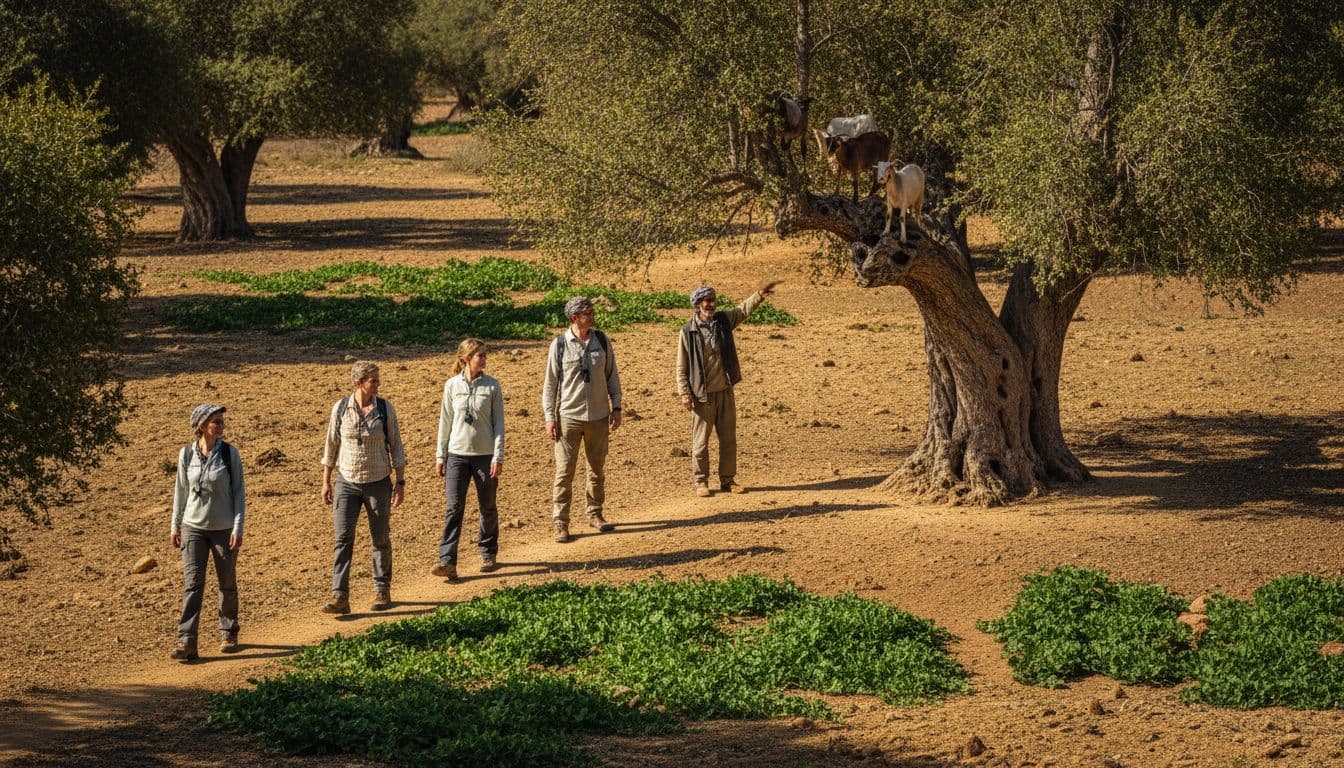
If you want a sense of how these rural visits connect with place, this overview of argan experiences in Morocco gives useful local context. The best outings stay small-scale and give the area room to breathe.
How eco-tourism helps local livelihoods
Tourism can help when the money stays local. Buying directly from producers, hiring local guides, and sleeping in family-run guesthouses all keep more value in the community. That matters in places where drought and market swings can hit hard.
It also supports nature conservation in a practical way. If families earn from keeping argan traditions alive, they have stronger reason to protect trees, harvest with care, and resist short-term damage. For travellers who care about wildlife, eco destinations, and responsible travel, that link is hard to ignore.
Protecting authenticity while demand keeps rising
Argan oil is popular across food, beauty, and wellness markets, and that demand is still climbing in 2026. Morocco produces almost all of the world's argan oil, with annual output often estimated at 4,000 to 6,000 tonnes. Yet only a share of that leaves the country, roughly 1,000 to 1,500 tonnes in many recent estimates. Supply is tight because the tree's home is limited.
At the same time, new export interest is adding pressure. Reporting on Morocco's argan boom has pointed to stronger global demand and wider recognition of argan's cultural value. More buyers can help co-ops, but only if the system stays fair.
The risks of fake or diluted argan products
Some bottles are diluted with cheaper oils. Others use vague wording such as "argan blend" or wrap low-quality oil in expensive branding. That confuses buyers and harms producers who do careful work.
Poor sourcing causes damage too. If sellers chase volume at the lowest cost, co-ops can lose bargaining power and trust in the market falls. Once trust slips, honest producers pay the price.
Why conservation is part of every purchase
Every real bottle begins in a fragile place facing drought, grazing pressure, and forest loss. Morocco has backed new planting and protection work, including the "Argan and Oasis" programme, because the tree's future can't be taken for granted.
So buying well matters. Choose traceable oil, fair trade when available, and sellers who name origin clearly. That simple habit helps protect a rare habitat, supports women-led work, and keeps argan tied to the land that made it possible.
Conclusion
The beauty of Moroccan argan starts with a hard truth: its home is small, dry, and under pressure. That is why the oil matters. It carries the mark of one place, one long craft, and many local hands.
For travellers and buyers alike, authenticity means more than purity in a bottle. It means respect for the grove, fair value for women's cooperatives, and low-impact tourism that helps rather than harms. When you choose genuine argan, you help keep Morocco's argan heartland alive for the years ahead.
FAQ
Is all argan oil from Morocco?
Real argan oil comes from Morocco. The argan tree grows naturally in south-west Morocco, and that limited origin is part of what makes the oil rare and widely valued.
What's the difference between culinary and cosmetic argan oil?
Culinary argan oil uses roasted kernels, so it has a deeper, nutty scent and flavour. Cosmetic argan oil usually comes from unroasted kernels, so it smells milder and is made for skin and hair care rather than food.
How can travellers buy argan responsibly?
Buy from trusted cooperatives or sellers with clear origin details. It's also wise to choose small-group visits, spend with local businesses, and avoid tours that treat people or places like props.