
Carbon-Neutral Holidays: How You Can Cut Your Footprint
A carbon-neutral holiday lets you enjoy the journey while keeping your climate impact in check, and that matters more now if you care about nature, wildlife, and the places you visit. You can still have a memorable trip, but you need to make smarter choices about how you travel, where you stay, and what you support along the way.
The basic idea is simple, reduce your footprint first, then offset the emissions you cannot avoid through credible projects. If you want inspiration for lower-impact trips, start with eco-friendly destinations in France, then use the practical steps below to plan holidays that feel good without costing the Earth.
What a carbon-neutral holiday really means
A carbon-neutral holiday starts with a simple promise, you cut your travel emissions as much as you can, then balance what remains with credible offsets. That sounds tidy on paper, but the real work happens before you ever buy a booking. You need to know where your footprint comes from, which choices matter most, and what counts as a genuine carbon-neutral travel plan.
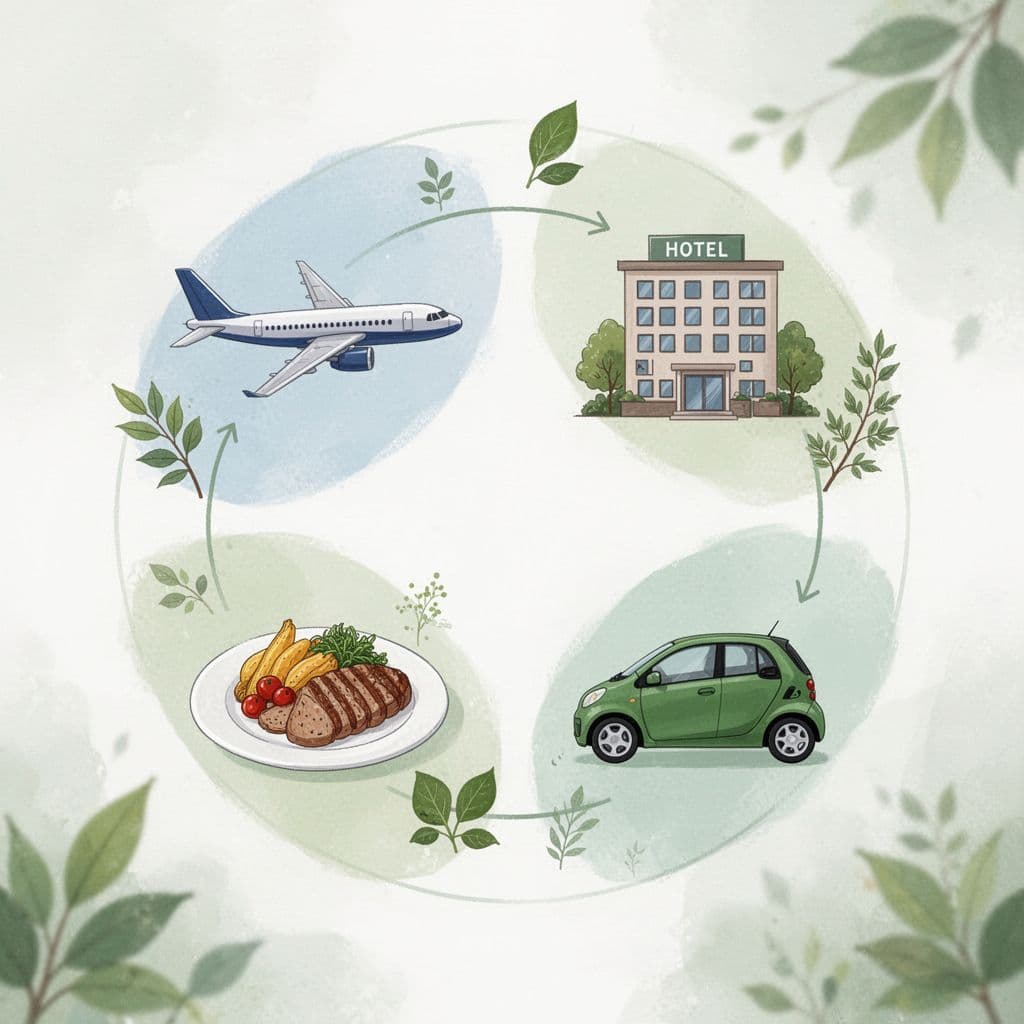
Where your holiday footprint usually comes from
Most of your holiday emissions come from a few predictable places, and transport usually leads the way. A long-haul flight can dwarf everything else, while a short car trip with one person behind the wheel can also add up fast. If you want the biggest win, start with how you get there.
Accommodation matters too. Hotels, resorts, and rental properties use energy for heating, cooling, hot water, laundry, and lighting. A large hotel with constant air-conditioning will usually produce more emissions than a smaller stay that runs more efficiently.
Food often slips under the radar, yet it still makes a difference. Meals with a lot of red meat and dairy usually have a heavier footprint than plant-led dishes, especially when you eat that way every day of the trip. Single-use items add extra waste, too, from bottled drinks to disposable toiletries and takeaway packaging.
Then there are the activities you choose once you arrive. High-energy excursions, private boat trips, and motor-heavy tours can raise the footprint, while slower, local options tend to stay lighter. If you want a quick reference point, tools such as the Holiday emission calculator show how transport, accommodation, and activities stack up on a typical trip.
A useful rule is this, the parts of your holiday that burn the most fuel or use the most energy are usually the places where you can cut the most carbon.
Why reducing first matters more than offsetting first
Offsets have a place, but they should come after you reduce your emissions, not before. If you choose a lower-carbon flight, take the train, stay longer in one place, or skip a car hire, you stop pollution at the source. That is far better than allowing the emissions to happen and trying to balance them later.
Offsets can help with the emissions you cannot avoid, yet they do not erase the impact of the trip itself. The plane still burns fuel. The car still uses petrol. The hotel still draws power. That is why a smaller footprint always gives you a stronger result than a big footprint with a payment attached.
A carbon-neutral holiday is not about buying your way out of impact. It is about making fewer emissions in the first place, then using offsets only for the part you cannot remove.
This approach also gives you better control. If you reduce your footprint now, you benefit on every trip after that, because the lower-impact habits stay with you. Offsets do not do that on their own, and some projects take years to deliver the carbon savings they promise.
The clearest way to think about it is this, if you can avoid a tonne of emissions, that is more reliable than paying to compensate for a tonne later. For broader context on why travel emissions are driven so strongly by transport, food, and lodging, see the research on drivers of global tourism carbon emissions. It shows how quickly travel demand, transport, and spending push emissions upwards.
A carbon-neutral holiday, then, is not a marketing badge. It is a process, reduce first, offset second, and choose each part of the trip with care. When you plan that way, your holiday feels lighter, and your choices line up with the kind of travel you actually want to support.
How to choose lower-carbon transport without ruining the trip
You do not need to turn your holiday into a logistics exercise to cut emissions. The best low-carbon transport often makes the trip easier, not harder. When you pick the right route and pace, you get more time to look out of the window, less stress around airports, and a holiday that feels more grounded from the start.
The trick is to match the transport to the trip. For some journeys, that means rail. For others, it means a coach, a shared ride, or a short flight used only when there is no sensible alternative. Once you arrive, the same logic applies again. The lighter and simpler you travel, the less fuel you tend to use.

Pick trains, coaches, and shared rides when they work
If rail works for your route, it is often the cleanest and easiest choice. Trains cut out airport queues, baggage limits, and much of the waiting around that eats into a trip. They also let you arrive closer to city centres, national parks, and coastal towns, which means less time spent on a final transfer.
Coaches can be a smart backup when rail is expensive or limited. They usually produce less carbon per passenger than driving alone, and they can be a good fit for budget trips, group holidays, or routes with poor rail links. Shared car travel also helps when public transport is thin on the ground, especially for rural stays, family trips, or the last stretch to your accommodation.
A simple rule helps here, choose the mode that carries more people with fewer empty seats. If you want a practical benchmark, the Met Office sustainable travel advice shows why trains, coaches, and shared transport often beat solo car use on emissions. In everyday holiday planning, that usually means checking rail first, then coach, then shared car before you book anything else.
If you do fly, make the flight less damaging
Sometimes flying is still the only realistic option, especially for long-haul trips or places that are badly served by rail. In that case, the goal is to make the flight as efficient as you can. Direct routes are the best place to start, because each stopover adds extra take-offs, landings, and miles flown.
You can also cut the damage by flying less often and staying longer once you arrive. One longer holiday usually makes more sense than several short breaks that all need separate flights. That approach spreads the emissions over more days, and it often gives you a better trip as well, because you are not rushing from place to place.
If you must fly, choose the flight that gets you there with the fewest segments and the fewest extra trips.
It also helps to avoid unnecessary add-ons that push you into a more complicated itinerary. If a destination can be reached by train, a night on the rails may be a better use of your time than a short-haul hop. The United Nations' transport guidance is clear that walking, public transport, and car-sharing all reduce emissions, so the same thinking applies when you are planning the journey around your flight too.
Move lightly once you arrive
The lowest-carbon holiday transport does not stop at the destination. Once you are there, walking and cycling can handle a surprising amount of your travel. They cost less, keep you close to the place you came to see, and often turn an ordinary transfer into part of the experience.
Public transport is the next best choice in many cities. Buses, trams, and local trains can take you between sights without the hassle of parking or traffic. Electric car hire makes sense when you need more flexibility, but it works best when you use it sparingly and share it with others where possible.
Packing light helps too. A heavy bag takes more energy to move, whether it is on a plane, coach, train, or car. If you can leave the extra shoes and duplicate gadgets behind, you make the whole trip simpler. A lighter suitcase is easier on you and easier on the fuel bill, which is a rare travel win on both sides.
For local travel, aim for a simple mix:
- Walk for short journeys, especially in towns and cities.
- Cycle when the area has safe routes or bike hire.
- Use buses and trams for longer cross-town hops.
- Choose electric car hire only when public transport does not fit the plan.
That approach keeps your holiday flexible without defaulting to the car for every move. It also gives you a better feel for the place, because you notice the streets, the pace, and the small details that zipped-up travel often misses.
Where you stay can make a big difference
Your accommodation can either quietly support a lower-footprint holiday, or add a lot of avoidable waste. A well-chosen stay can cut energy use, reduce water demand, and keep more money in the local area. That matters, because the place you sleep often shapes the rhythm of the whole trip.
If you want your holiday to feel lighter on the planet, start by looking beyond the photos. A pretty room means little if the property relies on wasteful systems or vague marketing. You want signs of real action, not polished green language.
What to look for in an eco-friendly place to stay
A genuine eco-friendly stay usually shows its work. Look for renewable energy, such as solar or a clear commitment to buying clean electricity. You can also check for practical steps like LED lighting, smart heating controls, and good insulation, since these reduce energy use without affecting your comfort.
Water-saving systems matter just as much. Low-flow showers, dual-flush toilets, leak checks, and linen reuse programmes all help lower the strain on local supplies. In places where water is limited, these details are not small extras, they are part of responsible travel.
Waste reduction should be easy to spot too. Refill stations for toiletries, recycling points, composting, and reduced single-use plastic all point to a property that takes its impact seriously. If a hotel says it is sustainable, ask what that actually means in daily practice. A strong sustainability page should mention local sourcing, cleaner products, waste targets, and staff training, not just a leaf logo and a few soft claims. For a useful checklist on spotting real action, see how to check sustainable accommodations.
If a property cannot explain what it does, or show proof, treat the claim with caution.
Trusted certifications can also help you separate real progress from greenwash. Labels such as GSTC, Green Key, Green Seal, GreenSign, and EU Ecolabel give you a better signal than vague wording alone. You can also ask whether the building has LEED, BREEAM, or ISO 14001 standards in place, then check what those cover in practice. The GSTC certification criteria are a strong place to start when you want a clearer benchmark.
Why local, smaller stays can be a smarter choice
Family-run guesthouses, small eco-lodges, and community-based stays often use fewer resources than large resorts. They usually have simpler operations, less heavy infrastructure, and a more personal approach to service. That can mean lower energy demand, less waste, and a warmer welcome for you.
There is also a wider benefit. When you book a small, locally owned stay, more of your money tends to stay in the area. That supports local jobs, local suppliers, and sometimes conservation work or community projects too. It is a straightforward way to make your holiday help the place that hosts you.
If you enjoy travel that feels more rooted in place, smaller stays often give you that sense of connection. You notice local food, local advice, and the pace of daily life in a way large chains rarely deliver. You can also find good options through UK ecotourism companies that already focus on lower-impact travel.
A small stay does not automatically mean sustainable, of course. Still, it often gives you a better chance to ask direct questions, see how the business works, and support hosts who care about both people and nature. That is a strong place to be when you want your holiday to leave a gentler mark.
Eat in a way that lowers your holiday emissions
Food can change the footprint of your trip more than you might expect. The good news is that you do not need a strict menu or a joyless list of rules. You can eat well, enjoy local flavours, and still keep your holiday emissions lower with a few smart choices.
When you travel, every meal is a chance to support the place you are visiting. That means choosing food that is close to home, in season, and prepared with less waste. It also means treating your meals as part of the trip, not as an afterthought.

Choose local, seasonal food more often
Local food usually has a shorter journey, so it often carries less transport impact. Seasonal produce also tends to need less energy, because it is grown at the right time of year instead of in heated greenhouses or through long storage. That is a simple swap, but it matters.
You also tend to get better flavour. Tomatoes picked near their peak taste fuller, fruit feels fresher, and regional dishes often tell you more about a place than a familiar chain meal ever could. For a clearer picture of why food choices matter so much when you travel, Connect4Climate explains the link between meals and travel emissions.
Try to let your destination guide your plate. Visit farmers' markets, ask what is in season, and choose small restaurants that buy from nearby growers. That keeps money in the local economy and helps support the farmers, fishers, and food makers who shape the region you came to see.
A few easy habits make this even simpler:
- Order regional dishes that use local ingredients.
- Pick fruit and vegetables in season rather than imported out-of-season options.
- Use market stalls when you want a quick snack or picnic food.
- Choose smaller eateries that print daily specials based on what is fresh.
One useful rule is this, local matters most when it replaces food that has travelled far or been grown with extra energy. A local apple is a better choice than an imported one, but a plant-based meal still beats a high-impact meat dish in most cases. So, keep the focus on both where the food comes from and what it is.
Cut waste without making your trip feel restrictive
You can lower food waste without turning your holiday into a checklist. Start with the small stuff that adds up fast, like carrying a reusable bottle, a container, and a shopping bag. These simple items save you from taking more packaging than you need.
At cafes and takeaway spots, say no to extras you won't use. You do not need a second napkin, extra cutlery, or a plastic lid for every drink. That one choice may feel tiny, but repeated across a trip it cuts a surprising amount of waste.
Buffets call for a bit of discipline too. Take a smaller first portion, then go back if you are still hungry. It keeps food off the bin and food on your plate where it belongs. Sharing dishes is another easy win, especially when portions are large or you want to try several local flavours.
If you order in a restaurant, be honest about your appetite. Finish what you can, ask for a box if you cannot, and avoid over-ordering just because you are away. Travelling should feel enjoyable, not wasteful.
A simple approach works best:
- Bring your own reusable bottle and container.
- Refuse packaging you do not need.
- Share large meals when portions are generous.
- Finish your plate, or save the rest for later.
The easiest waste reduction habit is also the least disruptive, order a little less than you think you need, then add more only if you still want it.
When you eat this way, you keep the holiday relaxed and the footprint lighter. You spend less on throwaway items, you waste less food, and you make room for meals that feel more connected to the place around you.
Use your spending power to support better tourism
Every booking you make tells the travel industry what you value. If you choose well, your money supports cleaner tours, fairer jobs, and better care for wildlife. That matters just as much as the carbon side of your trip, because tourism can either back local communities or drain them.
Use your spending power as a filter. Ask whether the operator respects nature, pays local people fairly, and keeps impact low. The best options usually make those answers easy to see.
Book tours that put nature and people first

A responsible tour operator should make its approach clear before you book. Look for small group sizes, because fewer people mean less trampling, less noise, and more space for wildlife to behave naturally. If a company hides group numbers, that is a warning sign.
You should also check how the tour handles animals and sensitive habitats. Good operators follow wildlife rules, keep a safe distance, and never bait or harass animals for photos. If the itinerary promises close contact, feeding, or staged encounters, walk away.
Local hiring matters too. When guides come from the area, your money stays closer to the community, and you also get better context about the place you are visiting. A local guide can show you how to behave around sacred sites, seasonal trails, and protected areas, which makes your visit smoother and more respectful. The Lonely Planet guide to responsible tour operators is useful if you want a quick checklist before you book.
A strong operator usually does several of these things:
- uses local guides and drivers
- follows wildlife viewing rules
- limits group size
- supports conservation fees or park work
- explains where your money goes
- shares a written responsibility policy
If a tour company says it is sustainable, ask what that means in practice. Clear answers matter more than glossy wording.
You can also look for direct support for conservation. Some tours contribute to habitat protection, community projects, or park management fees. That is a good sign, because it means your spend is helping the place stay healthy after you leave.
Choose souvenirs and experiences with care
Souvenirs should carry a memory, not a harm trail. Handmade crafts, local textiles, pottery, food products, and artist-made pieces are far better choices than mass-produced trinkets. They usually keep more money in the community and give you something real to take home.
Avoid anything made from wildlife, including shells, feathers, ivory, coral, skins, or dried animals. Even when items are sold openly, they can still feed illegal trade or pressure vulnerable species. The IUCN Red List shows how many species are already under strain, so your purchase should never add to that burden. If you want a broader conservation lens, The IUCN Red List background explains why species status matters.
Experience choices need the same care. A cooking class with a local family, a community walk, or a market visit is usually a better use of your money than a staged attraction built around animals or exploitation. You are looking for experiences that share skills, culture, and income, not ones that strip those things away.
A simple mindset shift helps here. Before you pay, ask yourself whether the purchase:
- supports local livelihoods
- respects wildlife and habitats
- preserves culture instead of turning it into a show
- leaves the place better off
That question changes the way you travel. You stop buying for the shelf, and start spending for the place itself. Your holiday then becomes part of a healthier local economy, not just a transaction.
How to offset the emissions you cannot avoid
Once you have cut the easy emissions, offsetting can help cover the rest of your trip. The key is to treat it as a final step, not a shortcut. A good offset should back projects that can prove real climate benefit, not just sound impressive on a website.
You want your money to support work that lowers emissions or locks carbon away for the long term. That means looking past glossy claims and checking what the project actually does on the ground. If you are already choosing lower-impact trips, as in these main goals of ecotourism, offsetting becomes a sensible way to handle the part you cannot remove.

What a good carbon offset should fund
A strong offset goes to a project with a clear climate job to do. Renewable energy projects can replace dirtier power, while forest protection can stop stored carbon from being released. Both can be useful, but only when they are well managed and properly checked.
You can also look for methane capture, which matters because methane is a powerful greenhouse gas. Capturing it from landfills, waste sites, or agricultural systems can produce real reductions. Verified restoration work has a place too, especially when it rebuilds damaged land and shows how much carbon the project can store over time.
The best projects do more than claim a benefit. They measure it, monitor it, and publish the results. That is where credibility starts. If a project cannot explain how much carbon it saves, how it is checked, and who verifies it, you should step back.
A good offset usually has these traits:
- Measurable results, so you can see the carbon benefit in plain terms
- Verified delivery, so a third party has checked the numbers
- Long-term value, so the climate benefit does not disappear after a short while
- Local or social benefits, where communities also gain from the project
For a holiday offset, cleaner energy, forest protection, methane capture, and land restoration are the types most worth your attention. The project should feel like a real climate task, not a guilt payment.
How to spot offsets that are worth your money
Start with the standard. Trusted programmes such as Gold Standard, Verra VCS, Climate Action Reserve, American Carbon Registry, Plan Vivo, and Puro.earth are better known for quality control than loose, untested claims. A recognised label does not fix every problem, but it gives you a far better starting point.
Next, check for third-party verification. That means an outside body has reviewed the project, not just the company selling it. You should also look for additionality, which means the project would not have happened without offset funding. If it would have gone ahead anyway, your money is not creating extra climate benefit.
Transparency matters just as much. A trustworthy seller should tell you where the project is, what it funds, who checks it, and how credits are retired so they are not sold again. If those details are hidden behind vague language, the offer is weak.
If the project page reads like a promise but shows no proof, treat it as a red flag.
Long-term impact is the final check. Forest projects need fire, land-use, and leakage risks managed carefully. Restoration projects need monitoring over time. Carbon removal work needs clear storage plans. If the benefit can vanish quickly, the offset is much weaker.
It also helps to buy from a provider that explains its work plainly. Short descriptions, public registries, and recent project data are better than broad claims about being "green". For a travel-focused reminder of why lower-impact choices matter in the first place, family-friendly ecotourism destinations can show how thoughtful trip planning and lighter travel often go hand in hand.
When you choose well, offsetting becomes part of a responsible holiday plan. You reduce first, support credible projects second, and keep your money aligned with climate action that can be checked, measured, and trusted.
Small travel habits that add up fast
Carbon-neutral travel is built on small choices that repeat all day, every day of the trip. You do not need a perfect itinerary to make a real difference. In fact, the habits that feel almost too simple often do the most work.
A lighter bag, a slower plan, and a bit more care around nature all reduce waste in their own way. They also make your holiday calmer, because you spend less time managing stuff and more time enjoying the place in front of you.

Pack lighter and waste less
When you pack less, you help cut fuel use across the journey. Planes use more fuel when they carry extra weight, and the same basic idea applies to cars, buses, and trains too. Every kilogram you leave behind makes movement a little easier and a little cleaner.
Packing light also helps you cut single-use waste before it starts. Bring a reusable water bottle, a foldable shopping bag, compact cutlery, and toiletries in refillable containers. Those small items replace a stream of disposable cups, plastic bags, and travel-sized bottles that usually end up in the bin.
A useful packing rule is simple. If you can use the same item twice, pack that instead of a throwaway version. That one habit trims waste and keeps your bag easier to carry.
Stay longer and do less rushing around
Slow travel is often the cleaner choice. One longer stay usually works better than several short stops, because you avoid repeated transfers, extra check-ins, and unnecessary trips between places. That means lower transport emissions and less time spent in transit.
It also gives you a better holiday. You notice the local rhythm, eat more naturally, and spend more time in one area instead of skimming past it. The trip feels less like a checklist and more like a proper stay.
If you want a practical result, build your plans around fewer moves. A train into one region, a longer base, and day trips from there is often smarter than bouncing between three hotels in four days.
Respect wildlife, trails, and local rules
Carbon-neutral travel works best when it sits alongside responsible behaviour. If you stay on marked paths, you protect fragile plants, stop soil erosion, and keep trails usable for everyone. If you keep your distance from animals, you avoid stress, harm, and unsafe encounters.
Park guidance matters too. Rangers and local staff know which areas need extra care, which routes are closed, and when wildlife is nesting or feeding. Follow their advice, even when it asks you to change plans.
Leave-no-trace habits still count on a short walk or a long holiday. Carry out your rubbish, avoid loud noise near animals, and never take anything from the landscape. That respect is part of low-impact travel, because a lighter footprint is about more than carbon alone.
The smallest holiday habits work best when you repeat them without thinking, because that is what makes them add up fast.
When you pack lightly, stay longer, and travel with more care, you lower your footprint without losing the joy of the trip. Those simple choices are easy to repeat, which is exactly why they matter so much.
FAQ
If you are planning a carbon-neutral holiday, a few clear answers can save time and help you make better choices. The points below cover the questions that come up most often, especially when you want lower emissions without stripping the joy out of the trip.

What is a carbon-neutral holiday?
A carbon-neutral holiday is a trip where you cut your emissions as much as possible, then offset what you cannot avoid. That usually means choosing lower-carbon transport, staying in efficient accommodation, eating in a lighter way, and supporting local businesses.
The important part is the order. You reduce first, then offset the remainder. If you skip the reduction step, you are just paying to balance out a larger footprint.
Are carbon offsets enough on their own?
No, they are not. Offsets can help with the emissions you cannot remove, but they should never replace real cuts in travel impact. A shorter flight, a train journey, or a longer stay in one place does more good than a big trip with an offset attached.
If you are checking whether an offset is worth your money, look for clear project details, third-party verification, and proof that the project would not have happened anyway. For a useful warning on green claims, see how to spot greenwashing in tourism.
A good offset supports a real climate project, it does not excuse wasteful travel.
Is train travel really better than flying?
Usually, yes. Trains often produce far less carbon than short-haul flights, especially when you factor in airport transfers, baggage handling, and waiting time. They also make slower travel easier, which often leads to fewer total trips and a calmer holiday.
That said, the best option still depends on your route. If rail is available, convenient, and reasonably priced, it is often the smarter choice. If you must fly, a direct route and a longer stay can help reduce the impact.
Do eco-hotels make a difference?
They do, if they back up their claims with action. Look for renewable energy, water-saving systems, reduced single-use plastic, waste sorting, and evidence of local sourcing. A small, locally owned stay can also keep more of your spend in the community.
The key is to ask simple questions. What do they do with energy, water, and waste? Do they support local jobs? Can they explain their sustainability practices clearly? If the answers are vague, keep looking.
What is the easiest change you can make first?
Pack lighter, use reusable items, and choose lower-carbon transport when you can. Those three changes are simple, but they cut waste quickly and make the rest of your trip easier to manage.
If you want to start with one step today, pick the option that removes the most emissions from your journey. Then build from there, one clean choice at a time.
Conclusion
A carbon-neutral holiday works best when you treat it as a set of smart choices, not a perfect score. You cut the biggest emissions first, then offset what remains, while keeping your travel lighter through better transport, lower-impact stays, simpler meals, and more thoughtful activities.
That is where the real shift happens. You travel with more care, support local people and wildlife, and keep your footprint smaller without losing the joy of the trip.
What eco-friendly travel habits do you already use, and what has made the biggest difference for you? Share your own experience in the comments, because your ideas help other travellers make better choices too.