
Your Eco-Tourism Payment Guide: Cash vs Cards and Travel Banks
Eco-tourism often takes you far beyond city centres, where the nearest ATM can be miles away and the village market may take cash only. If you want to avoid awkward moments at an eco-lodge, on a local bus, or when paying a guide, you need a payment plan that fits the trip.
The smartest travellers use a mix of cash and cards. Cash helps you support local communities and handle remote, low-tech situations, while cards are safer for bigger bookings, emergency costs, and places with card machines. The real trick is knowing when each one works best, and which travel-friendly bank or card can cut foreign fees and give you a fairer exchange rate.
That usually means carrying some local currency, keeping backup cash separate, and choosing a card from providers such as Revolut, Wise, Monzo, or N26. In the next section, you'll see how to balance cash and cards without overpaying or getting caught short.
Why eco-tourism payments work differently from city travel
Eco-tourism changes the payment rules because you are often moving through places where internet signal, card machines, and bank branches are patchy at best. In a city, you can usually tap your card, split a bill, and move on. In a remote lodge, a village market, or a boat stop on a riverbank, cash often keeps the day moving.
That difference matters. Small eco-businesses usually run on tight margins, and cash is quicker for them than card payments. It also avoids processing fees, which is one reason many local guides, guesthouses, and transport providers still prefer notes and coins. You get a smoother trip, and your money reaches the people you are trying to support.
The places where cash still rules

Cash is still the safest choice in the places where tourism feels most local. You will often need it for local guides, market stalls, tuk-tuks, rural guesthouses, small boat trips, toilet fees, tips, and entrance fees in remote areas.
A nearby town may accept cards, yet the smaller eco-businesses around it may not. That is normal. They often prefer cash because it is faster, easier to count, and does not come with card charges. If you are buying fruit at a market, paying for a short jeep ride, or settling a night at a family-run homestay, cash usually keeps things simple.
In many places, you will also find that a card is accepted in theory, but the signal drops as soon as the machine appears. That is when your backup cash matters most.
If a place looks remote, assume cash will matter more than you expect.
Where cards are usually accepted
Cards are more common for bigger, pre-booked travel costs. You are more likely to pay by card for flights, larger hotels, city-based eco stays, car hire, and some organised tours. These businesses usually have better systems in place and can handle card payments without a fuss.
For everyday travel money, Visa and Mastercard are the safest bets for acceptance. Contactless payments and mobile wallets can also be useful, but only when the area has reliable signal and proper card equipment. If the reader is down, the app will not save you.
Travel-friendly banks such as Revolut, Wise, Monzo, and N26 can help here, especially when you want a better exchange rate and lower foreign card fees. They are useful for online bookings, city hotels, and backup spending when cash runs low. For remote places, though, they work best as part of a mixed approach, not as your only plan.
For a wider look at how card payments and travel money fit into sustainable trips, see sustainable travel and local payments.
Keep one rule in mind: use cards where the system is built for them, and carry cash where the trip depends on people, not terminals. That way, you stay flexible without paying more than you need to.
Have you ever visited a place where cash was the only payment option? Share your experience in the comments.
How to decide between cash and cards before you leave
The best choice is rarely one or the other. You usually want a travel mix that covers your first couple of days, then gives you safe backup if plans change. That keeps you ready for a village guesthouse, a park entrance fee, or a last-minute room upgrade without stuffing your wallet full of notes.
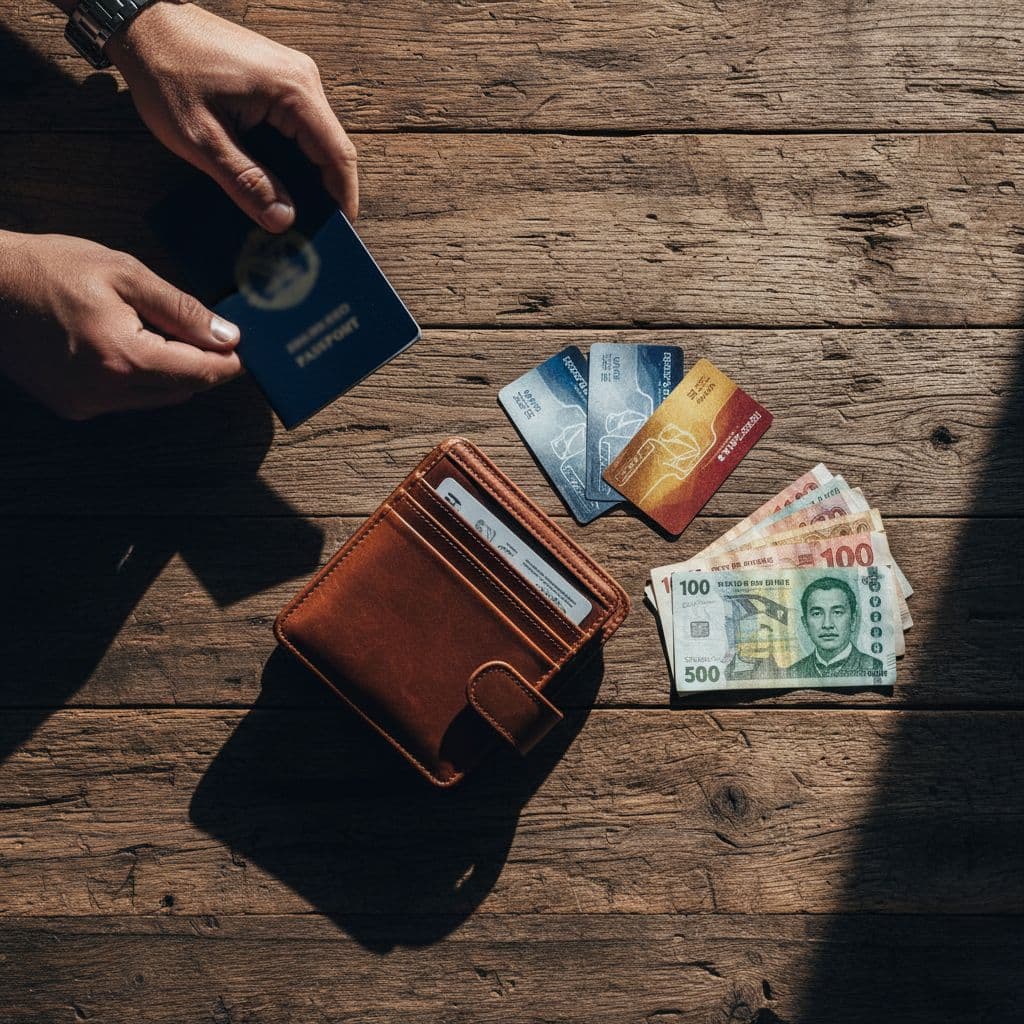
A good rule is simple. Carry enough local cash for the first day or two, then rely on cards for bigger bookings, online payments, and emergencies. If you are heading into a rural eco-lodge, remote reserve, or island community, lean more towards cash. If your trip is based in a city with day trips, cards usually do more of the heavy lifting.
The point is flexibility. Every destination works differently, and a fixed amount can leave you short in one place and overpacked in another. Before you go, ask yourself how much of the trip happens near banks, ATMs, and card machines, and how much happens well away from them. That answer tells you where the balance should sit.
A simple rule for choosing your mix
Start with the trip style, not the payment method. A place with reliable signal, steady tourism, and proper hotel desks will usually accept cards for most bigger costs. A more rural route, where you pay guides directly or buy from small family-run businesses, often needs more cash in your pocket.
Use cash for the parts of the trip that happen on the ground, such as tips, local transport, market snacks, park fees, and small eco-lodge extras. Keep cards for flights, pre-booked stays, car hire, and any emergency spending you would rather not carry in notes. That approach gives you room to move without guessing.
If you want a quick check before departure, use this simple split:
| Trip type | Better balance |
|---|---|
| Rural eco-lodge or village stay | More cash, cards as backup |
| City hotel with day trips | More cards, smaller cash stash |
| Mixed itinerary | Balanced mix of both |
Carry what suits the trip you have, not the trip you wish you had. A safari camp, rainforest lodge, or mountain homestay will often feel much different from a coastal town break. For example, safari money tips show how remote stays can still accept cards for the booking, while extras and tips still need cash in hand.
If one part of your route looks remote, plan for cash first and cards second.
Questions to ask your accommodation or tour operator
Before you leave, send a short message and get the basics clear. That one step can save you from hunting for an ATM after a long transfer or discovering that the card reader only works when the generator does.
Ask whether card machines work reliably, and whether they take Visa and Mastercard without extra hassle. Check if cash is needed for tips, park fees, boat rides, conservation charges, or laundry. You should also ask which currency they prefer, because some places accept US dollars, while others want local notes only.
A few simple questions cover most trip headaches:
- Do you take cards for deposits and final payment?
- Do card machines work every day, or only at certain hours?
- Do you need cash for guides, drivers, or entry fees?
- Which currencies do you accept, and do you give change?
- Is there an ATM nearby, and is it reliable?
- Are there charges for card payments?
If you are unsure, ask the operator how other guests usually pay. That often gives you a clearer answer than a website does. It also helps you avoid bad surprises, such as a card fee on arrival or a lodge that only accepts cash after dark.
For more remote trips, it also helps to ask whether the nearest ATM is actually useful. In some areas, there is a machine in town, but it runs out of cash, rejects foreign cards, or sits in a spot you would rather not use after sunset. A practical payment plan starts with those details, not with guesswork.
Choose your cards with the same care. Travel-friendly banks such as Revolut, Wise, Monzo, and N26 can help with spending abroad, fairer exchange rates, and quick card controls in their apps. They are useful for bookings and backup funds, but they work best when you still carry enough cash for the parts of the journey that run on paper money and trust.
The best way to handle currency exchange without losing money
The cheapest approach is usually the simplest one. Exchange only a small amount when you first arrive, then use a fee-friendly card or a safe ATM for the rest. That keeps you out of airport rip-offs and gives you better control over your travel budget.
For eco-tourism trips, this matters even more. You may be moving between towns, lodges, and rural communities where cash still matters, but that does not mean you should swap a large stack of notes at the first counter you see. A few careful choices can save you a surprising amount.
Why airport exchange desks usually cost more
Airport exchange desks are convenient, and that is exactly why they charge more. They know you are tired, pressed for time, and often carrying no local currency. In that setting, many travellers accept whatever rate is offered, even when it is far from fair.
The problem is usually a mix of poor exchange rates and extra fees. Even when a kiosk claims "no commission", the real cost often sits in the rate itself. In plain terms, you get fewer local notes for the same money.
A good rule is to treat airport exchange as a last resort. Use it only for a small amount, enough for a taxi, a snack, or a tip on day one. For example, if you need local cash when you land, changing a modest sum covers the basics without leaving you stuck with a bad rate on your whole budget.
The more urgent the exchange feels, the more careful you should be.
If you want a wider comparison of exchange options, NerdWallet's currency exchange guide gives a clear breakdown of where fees tend to be lower.
Using ATMs safely in unfamiliar places
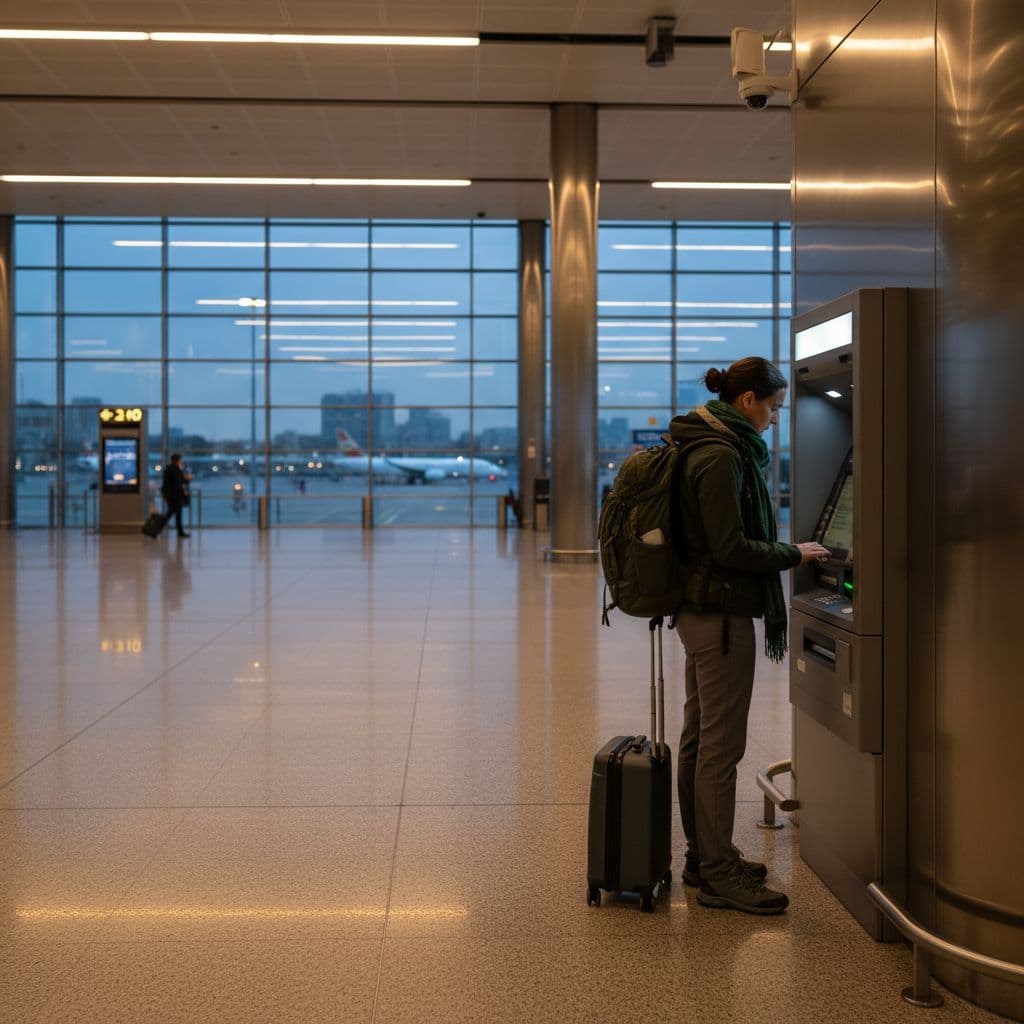
ATMs usually give you a better deal than exchange desks, as long as you use them carefully. Choose machines inside banks, in airports, or in busy, well-lit places. Those spots are easier to watch, and they are less likely to be tampered with.
Before you insert your card, check for anything odd. Loose card slots, strange attachments, or damaged keypads can be warning signs. Cover the keypad when you enter your PIN, and keep your hands close to the machine until the cash appears.
A single larger withdrawal is often better than several small ones. If your bank or card provider charges a fixed fee, repeated withdrawals can nibble away at your budget. One sensible withdrawal can cut those repeated charges and reduce the number of times you expose your card to risk.
Always choose to be charged in the local currency when the machine asks. That avoids dynamic currency conversion, which often gives you a worse rate than your own bank or card provider. In most cases, local currency is the smarter pick, even if the screen tries to make another option look easier.
For a practical guide on ATM safety and exchange pitfalls abroad, Investopedia's advice on currency exchange is a useful reference.
Travel-friendly banks and cards that can save you on fees
When you travel for eco-tourism, the wrong card can eat into your budget fast. Foreign spending fees, poor exchange rates, and awkward ATM rules add up quickly, especially when you are moving between towns, lodges, and remote trails.
The best travel money setup is the one that works in real life, not just on a comparison page. You want low fees, clear app controls, and a card that still behaves when you are far from a major city.

What to look for in a good travel card
Start with the fees, because they can change the whole cost of your trip. Check whether the card charges for foreign purchases, then look at the exchange rate used on weekdays and weekends. Some providers add a weekend mark-up when markets are closed, so a card that looks cheap on Monday can be less friendly by Saturday.
ATM rules matter just as much. A card with low withdrawal fees can still be awkward if it caps how much you can take out each day or month. If you are heading to a place where cash is still king, those limits can turn into a real problem.
You should also look at how the app works. Can you freeze the card instantly? Can you see each payment as it lands? Can you move money between pots or accounts without fuss? That kind of control helps when you are topping up before a guided trek or checking whether a lodge charge has come through properly.
A reliable travel card should also work well abroad, which sounds obvious, but it is not always the case. Visa and Mastercard usually have the widest acceptance, yet support quality matters too. If a payment fails in a small town, you want quick help, not a long chat queue.
The cheapest card on paper is not always the best card on the road.
For a practical comparison of travel accounts, this UK guide to international bank accounts is useful because it breaks down fees, exchange rates, and spending rules in plain terms.
A simple checklist helps you compare options without getting lost in the detail:
- Foreign transaction fee: lower is better, but check the fine print.
- Weekday and weekend exchange rates: some cards use mark-ups at the weekend.
- ATM withdrawal limits: make sure they suit your route.
- App security: freezing, spending alerts, and card lock features matter.
- Support abroad: fast help is worth more than a tiny saving.
If you travel often, a card that gives fair rates and good app control usually beats one that only looks cheap. That matters when you are buying local food, paying a guide, or getting cash in a village where one failed withdrawal can waste half a day.
When a digital bank can be more useful than a high street bank
App-based banks often make travel money easier to manage because you can see spending at once. That makes it much simpler to stay within budget when you are moving between eco-lodges, small hotels, and local transport.
You can also split money into separate pots or accounts, which helps with planning. For example, you might top up a travel card before a guided trek, then leave the rest of your spending money in a separate balance. If the card goes missing, you can freeze it in seconds and keep your trip moving.
That kind of control is especially handy in remote places. You might carry a spare card locked inside your bag, then keep your main card in your wallet for daily use. If your first card stops working at a fuel stop or market, you have a back-up without having to panic.
Banks such as Revolut, Wise, Monzo, and N26 are popular because they make these steps easy. Revolut offers travel money features and currency exchange tools, while Wise is known for holding and spending in different currencies. Monzo and N26 are useful for spending alerts, card controls, and quick transfers between accounts. For travellers who want a card they can manage from a phone, that convenience is hard to beat.
Digital banks also help you spot dodgy charges sooner. If a lodge bills you twice, or a taxi driver adds an extra amount, you can catch it quickly. That is far better than waiting for a paper statement when you are already on the next bus.
For travel-specific card features, Revolut explains its travel money card options clearly, including spending and withdrawal rules. That can help you compare what matters most before you leave.
A digital bank is not always the only answer, though. Some high street banks still offer strong overseas spending terms, useful branch access, and familiar customer support. If you prefer that security net, a traditional bank can still work well, as long as its card does not punish you for using it abroad.
The best setup is often a mix. Use one main travel card for most spending, keep a second card for backup, and carry cash for places where no card reader exists at all. That way, you are prepared for both the city hotel and the off-grid guesthouse without paying more than you need to.
Keeping your money safe while you travel lightly
Light packing makes travel easier, but it also means you need a tighter money plan. When you carry less, every note, card, and backup option needs a clear place. That matters most in eco-tourism, where you may pay small amounts several times a day for a guide, a bus, a market lunch, or a park fee.
The aim is simple. Keep enough cash to stay flexible, keep a card ready for bigger costs, and make it hard for a thief to find everything at once. If you set things up well before you leave, you can move through a trip without fumbling through your bag at every stop.
How to carry backup cash without panicking about theft
Split your cash before you set off, then forget about most of it. Keep a small amount in your wallet for daily spending, a second stash in a hidden pouch or money belt, and the rest in a secure place, such as a room safe, hostel locker, or locked bag. That way, if one place gets lost or taken, you do not lose the lot.
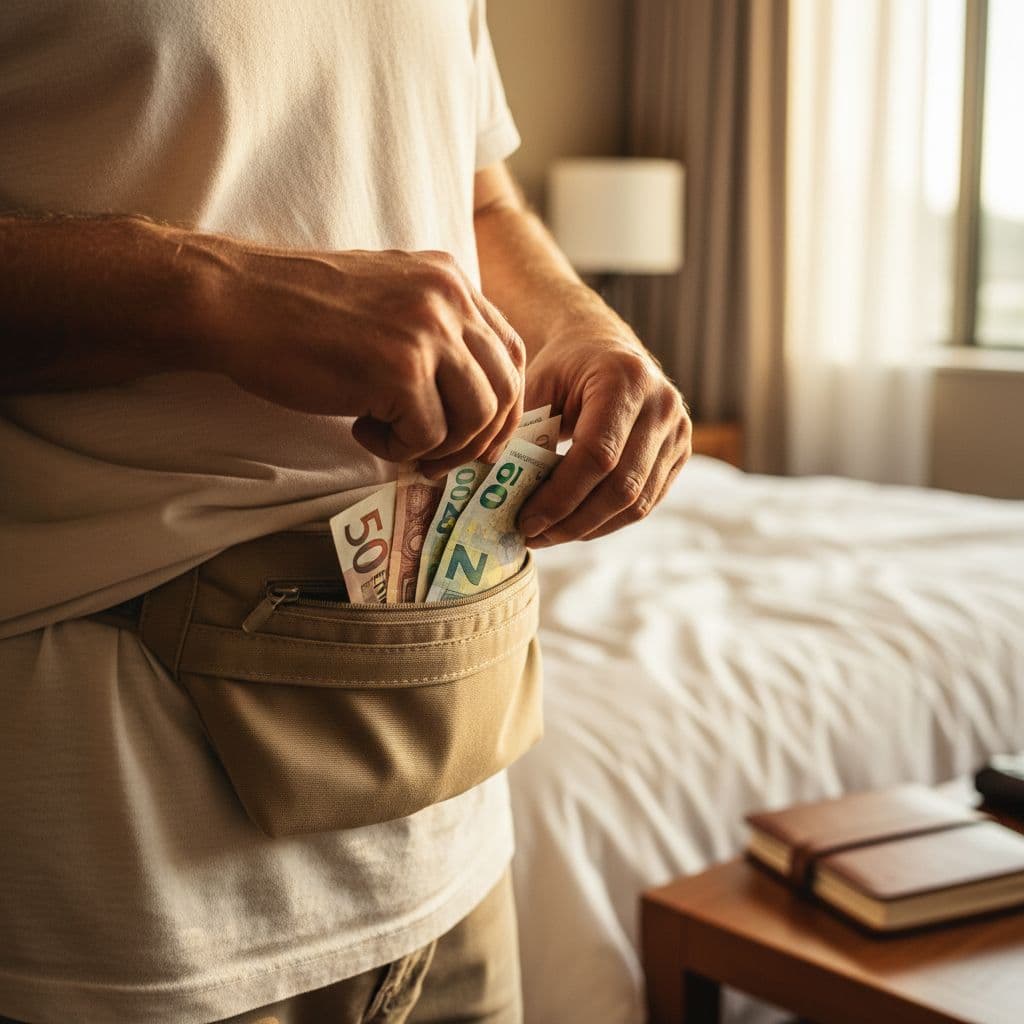
For remote areas, keep only what you need for the day in easy reach. If you are buying water, paying local transport, or tipping a guide several times, carry small notes rather than a thick bundle. Smaller denominations make life easier, because you will not have to break a large note in a tiny shop or on a dusty roadside stop.
A good routine looks like this:
- Keep day money in your wallet.
- Hide reserve cash in a pouch under your clothes.
- Store spare cash somewhere separate, not next to your main card.
- Refill your wallet once a day, not every hour.
If you are staying somewhere with a safe, use it for the money you do not need until later. If not, keep the larger stash zipped away in a bag you can lock. That simple split gives you breathing room without making you feel weighed down.
What to do if a card is lost, blocked, or refused
Start with the second card if you have one. Many travellers carry a main card and a backup card from a different provider, which gives you a fast way out when a terminal rejects the first one. If both are digital bank cards, keep them in separate places so one mistake does not affect both.
Open your banking app straight away and check whether you can freeze the card, unfreeze it, or see the reason for the block. If the bank has flagged a payment, a quick message through the app often sorts it out faster than waiting until you are back online later. For a lost or stolen card, contact the card issuer at once, and if needed, use the emergency support options described by Visa's lost card guidance.
Keep emergency cash for the basics, because remote areas are not always kind to card payments. A lodge may have enough signal for bookings but not for the till. A village shop may accept cards one day and refuse them the next. In those cases, your cash buffer buys food, transport, and time.
If a payment is refused, stay calm and try another method before you assume the trip is ruined. Banks such as Revolut, Wise, Monzo, and N26 are useful here because you can often move money, check spending, or lock a card from your phone. That kind of control matters when you are far from the nearest town and you still need dinner.
A refused card is often a signal problem, not a money problem.
Keep a short checklist in your head:
- Try the backup card.
- Check the app for a block or fraud alert.
- Use emergency cash for immediate needs.
- Contact the bank if the card is missing or still refused.
- Ask the lodge or guide whether another payment method works.
A little preparation goes a long way. If your card fails beside a market or on a bus stop, you will be glad you planned for the gap.
A quick payment plan you can use for your next eco-trip
You do not need a complicated money system to travel well. You need a plan that keeps you supplied with cash, protects you from bad exchange rates, and gives you a card when larger payments come up. That is especially useful on eco-trips, where one day may involve a card-friendly lodge and the next may mean a village market with no signal at all.

Split your money before you leave
A simple split works better than guessing at the airport. Put your trip money into three parts: day-to-day cash, backup cash, and card spending. That gives you room to pay a guide, settle a homestay bill, or handle a taxi without draining your main funds.
A practical setup looks like this:
- Cash for arrival and remote stops: enough for the first 2 or 3 days
- Backup cash: stored separately in case your wallet goes missing
- Card budget: for bookings, larger bills, and emergencies
If you are heading into a rural area, carry more cash. If your route includes cities or well-run eco-lodges, cards can do more of the work. For trips that support local communities, cash also helps you pay people directly, which keeps the money where it matters.
Use cards for bookings, cash for the ground
Your card should handle the bigger, cleaner payments. Flights, pre-paid lodges, and car hire usually fit here. Cash should cover the places that run on trust, speed, and small notes, such as local transport, market food, tips, park fees, and small excursions.
Travel-friendly banks such as Revolut, Wise, Monzo, and N26 make this easier because you can move money fast and watch spending in the app. That helps when you are checking whether a payment went through or topping up before a long transfer.
For a broader look at spending with a lighter footprint, how to spend consciously when you travel is a useful read.
Keep cash for the moments when a card reader is just a box on a counter.
Top up smart and avoid poor exchange points
Do not change all your money at an airport desk unless you have no choice. Exchange only a small amount there, just enough for the first taxi, snack, or tip. After that, use a safe ATM in a bank, airport hall, or busy, well-lit area.
If you can, withdraw in the local currency and let your bank do the conversion. That usually costs less than letting a foreign ATM operator set the rate. It also helps to keep a small reserve in a second pocket or pouch, so you are never stuck if one card fails.
A quick payment plan is really about calm, not complexity. If you set the split before you travel, you spend less time worrying about money and more time enjoying the place you came to see. Have you ever visited a place where cash was the only payment option? Share your experience in the comments.
FAQ
You'll run into a few recurring payment questions on eco-trips, especially when you leave big towns behind. The answers are usually simple, but they matter. A small cash mistake can turn into a long walk, a missed transfer, or an awkward moment at a family-run lodge.

How much cash should you carry?
Carry enough cash for the first one or two days, then keep a reserve separate from your wallet. In remote eco-tourism areas, that usually means enough for local transport, meals, tips, park fees, and small extras. If you are heading to a place where card machines are rare, carry more and keep it in different spots.
A sensible split is one small amount for daily use, one hidden backup, and cards for larger bills. That gives you room to deal with a cancelled transfer, a closed ATM, or a lodge that only takes cash. If you need a rough benchmark, think in terms of what you might spend on transport, food, and tips before you reach the next town.
When should you use cards instead of cash?
Use cards for bigger, planned costs such as flights, pre-booked stays, car hire, and some organised tours. That is where cards are usually safest and easiest. They also help if you need to pay from home before you arrive.
For everyday spending, cards are less reliable in remote areas. Many eco-lodges, guides, market stalls, and local drivers still prefer notes because it is quicker and cheaper for them. For larger trips, a travel-friendly bank or card such as Revolut's travel money card or a similar option from Wise, Monzo, or N26 can help you keep fees down and watch your spending.
What is the safest way to get local currency?
Avoid airport exchange counters unless you only need a small amount. They are convenient, but the rates are often poor. Get just enough for your first taxi or snack, then use a safe ATM in a bank, airport hall, or other well-lit place.
When a machine asks whether you want to pay in your home currency or local currency, choose local currency. That usually avoids a worse rate. For more detail on this, NerdWallet's currency exchange guide explains where travellers often lose money and how to avoid it.
If you are in a small town, assume cash matters more than you think, and keep a backup card separate.
A simple final check helps before you leave: tell your bank you are travelling, pack one primary card and one backup, and split your cash into two or three places. Have you ever visited a place where cash was the only payment option? Share your experience in the comments.
Conclusion
The best eco-tourism payment plan is the one that keeps you flexible. You use cash for remote stops, local guides, market stalls, and small community-run places, then you lean on cards for bigger bookings and safer backup spending.
If you choose a travel-friendly bank or card, such as Revolut, Wise, Monzo, or N26, you can cut fees and keep better control of your money. Add a small cash reserve, avoid airport exchange desks, and use ATMs in safe, well-lit places, and you'll spend less time worrying about payments and more time supporting the people and places you came to see.
A calm, well-planned mix of cash and cards makes your trip easier, safer, and better for local communities. Have you ever visited a place where cash was the only payment option? Share your experience in the comments.