
Your First Community Tourism Trip in Mexico and Central America
Your first trip can be more than a blur of plazas, beaches, and coach stops, it can put you at the family table, in a village workshop, or out on the water with the people who know the place best. If you're new to community tourism, northern Latin America here means Mexico and Central America, and the focus is on trips led by local people, not packaged around you from the outside.
In simple terms, community tourism means you stay, eat, learn, or explore in ways that keep more money and control in local hands. That sets it apart from a resort stay or a standard tour, where the experience often feels polished but distant. It also fits where travel is heading, because 2025 to 2026 trends point towards smaller, local-led and regenerative trips, with Mexico seeing record visitor growth in 2025 and Costa Rica staying a strong draw for nature-first travel.
So if you want your first visit to feel welcoming, grounded, and easier to plan than it sounds, you're in the right place. Next, you'll get a practical guide to choosing the right kind of community-led trip in Mexico and Central America.
What community tourism really means, and why it is such a good fit for your first visit
Community tourism is simple once you strip away the jargon. You spend time with people who live there, and they shape the experience. That means your stay, meal, workshop, walk, or boat trip is led by residents, family businesses, or small co-operatives, not mainly by outside hotel groups.
For a first visit, that matters. You get a gentler way into the place, because someone local is showing you daily life as it is, not just the postcard version. You also tend to travel in smaller groups, ask more questions, and come home with stories that feel personal rather than copied from a guidebook.
Good community tourism also has a clear standard. It is locally led, voluntary for the community, and respectful of local culture and land. UNESCO puts that idea plainly in its guidance on community-based tourism in Mexico.
How a local-led trip feels different from ordinary sightseeing
On a standard sightseeing day, you often look, snap a photo, and move on. You might see a weaving studio, a farm, or a village square, but you stay on the outside of it. The place becomes a backdrop.
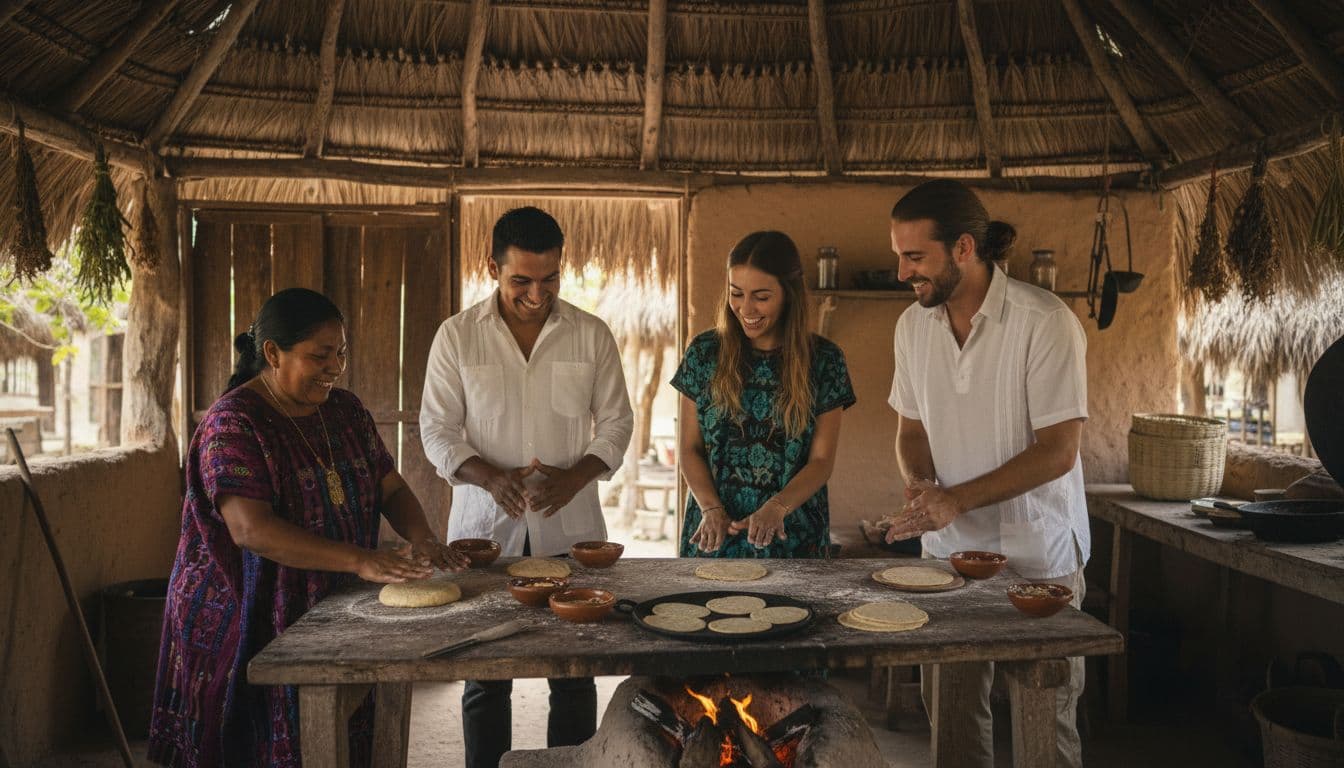
A local-led trip feels more open and more human. Instead of watching someone cook, you help pat tortillas or grind spices. Instead of passing a weaving shop, you sit down with the maker, learn how the threads are prepared, and hear what the patterns mean. A wildlife walk is not just "spot that bird"; it is a resident guide showing you which plants matter, which sounds signal movement, and why the area is protected.
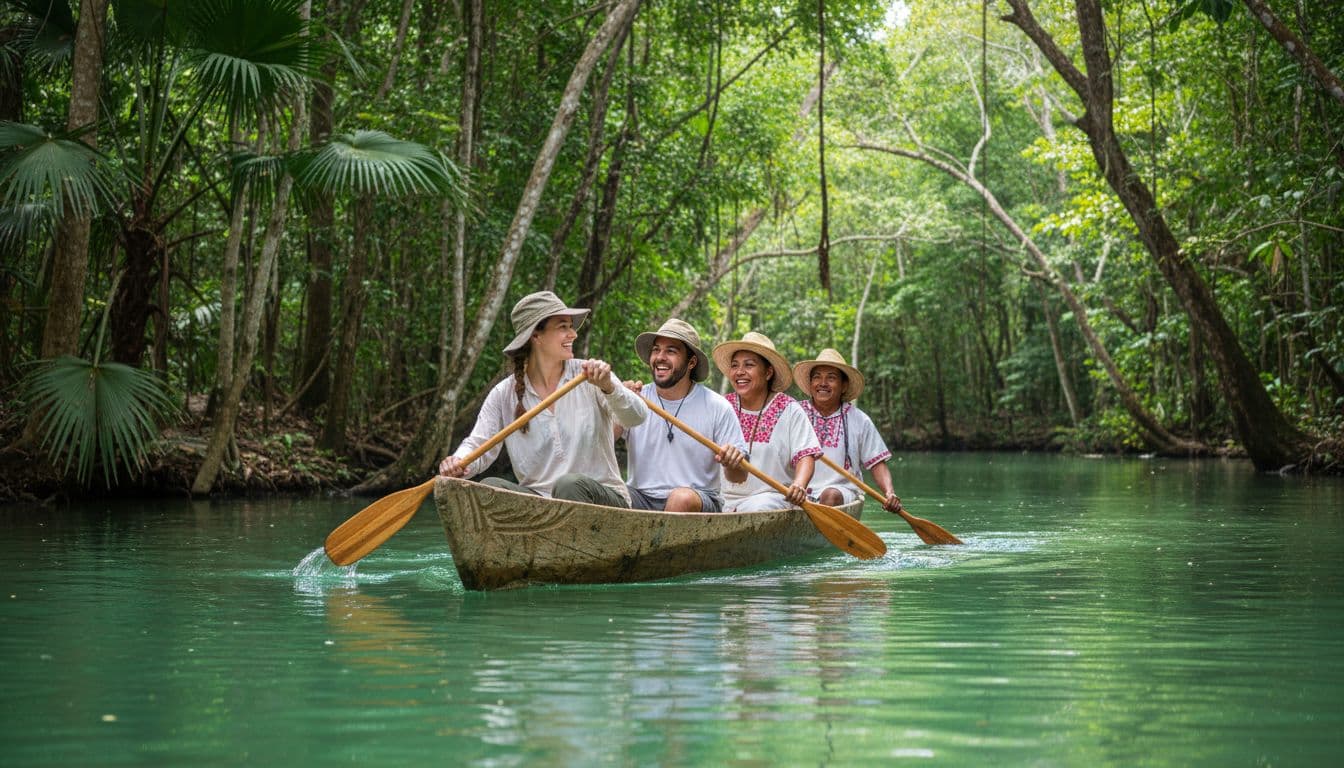
The same goes for time on the water. A canoe trip led by residents is rarely only about scenery. You learn how people use the river, what changes with the seasons, and what visitors should do to avoid harming the habitat. That turns a nice outing into something you actually remember.
You will often notice a few practical differences straight away:
- Groups are usually smaller, so you can talk properly.
- Activities are hands-on, so you are not just standing and listening.
- The pace is slower, which helps if it is your first time in the region.
- The stories come from lived experience, not a memorised script.
That is why community tourism fits first-time travellers so well. It gives you structure, but it does not wall you off from real life.
The benefits for you, and for the community you visit
The best part is that the benefits run both ways. When your money goes to a family guesthouse, a women-led cooking group, a village guide, or an artisan co-operative, more of it stays close to the people doing the work. In places across Mexico, community tourism programmes now back bee farms, agro-tourism routes, craft groups, and nature outings that create income for local families, including women and younger people, as shown in Merida's recent community tourism push.
That income can support more than a day's wages. It can help keep craft traditions alive, make cultural events worth passing on, and give younger residents a reason to stay involved. In some areas, it also supports conservation, because guided walks, protected wetlands, forests, and heritage sites have more value when the community has a fair stake in them. UNESCO also highlights this link between local control, cultural pride, and shared benefit in its piece on rural co-operatives in south-eastern Mexico.
For you, the gain is just as real. You get better conversations, sharper context, and memories with texture. A meal tastes different when you know who grew the maize. A woven bag means more when you watched part of the process. Even a short farm visit can change how you see the region.
You are not only paying to see a place. You are paying to understand it a bit better.
That is what makes community tourism such a strong choice for your first trip. It keeps the holiday enjoyable and easy to grasp, but it also gives you a fuller, more grounded view of daily life.
The easiest places to start with community tourism in Mexico and Central America
If you want your first community tourism trip to feel welcoming rather than hard work, a few places stand out straight away. The best starters give you good access, clear activities, and local contact without asking you to sort out every detail yourself.
That is why this short list stays selective. Each destination gives you a different kind of first step, whether you want weaving and food in Mexico, Maya-led workshops in Guatemala, wildlife in Costa Rica, or quieter community stays in Nicaragua and Panama.
Oaxaca and San Miguel de Allende, Mexico, for culture, crafts and easy first steps
Oaxaca is one of the easiest places to understand community tourism from day one, because local culture is not tucked away. It is right in front of you, in markets, kitchens, workshops, and village life. If you stay in Oaxaca City, you can keep the trip simple and still reach community experiences fast.
A great example is Teotitlan del Valle, a Zapotec weaving village about 30 to 40 minutes from the city. That short journey matters when it is your first trip. You can visit for half a day, meet artisan families, see natural dyes made from cochineal and plants, and learn why certain patterns matter. If you want a bit more context before you go, this Teotitlan del Valle weaving guide gives a useful picture of how easy the visit can be.

Photo by Anya Juárez Tenorio
You also have strong food-based options in Oaxaca. Village cooking sessions and family-run classes feel natural for first-timers because they give you structure. You are doing something with your hands, which makes conversation easier, especially if your Spanish is basic. That takes pressure off, and the day feels less like a formal tour.
San Miguel de Allende is different, and that is exactly why it suits some travellers better. It has a more polished, city-based feel, so you can dip into community-led walks, neighbourhood visits, craft encounters, and social projects without heading far into rural areas. For many first-time visitors, that softer landing is a real plus. You still get cultural contact, but with more comfort, easier logistics, and a familiar visitor set-up.
Choose Oaxaca if you want:
- More direct contact with indigenous village life
- Hands-on weaving, cooking, and market visits
- A stronger sense of regional identity and tradition
Choose San Miguel if you want:
- A lighter first step
- Community tours based around a comfortable city stay
- Culture and social impact experiences without long day trips
If you feel excited by workshops, food, and artisan villages, Oaxaca is the stronger first pick. If you want community tourism with fewer moving parts, San Miguel is easier.
Lake Atitlan and Antigua, Guatemala, for hands-on culture with simple day trips
Guatemala is brilliant for first-timers who want local culture but do not want a complicated route. Lake Atitlan and Antigua work well together because each gives you guided, manageable experiences that can fit into short stays.
At Lake Atitlan, San Juan La Laguna is one of the most approachable community stops. The village is well known for Maya-led art spaces, weaving co-operatives, medicinal plant projects, and coffee visits. That mix works because you are not locked into one long activity. You can build a gentle day around a boat ride, a textile demonstration, a coffee tour, and time in local galleries. This San Juan weaving and coffee tour overview shows how many first-time visitors do exactly that.
The mood is a big part of the appeal. San Juan feels active but not rushed. You can walk between experiences, talk to artisans, and still be back at your hotel by evening. If you are testing whether community tourism is for you, that flexibility helps.
Antigua makes things even easier. The town has a strong tourism base, so guided workshops and day trips are simple to book, and transfers are usually short. Coffee is the obvious starting point, but that is not a bad thing. On a good small-scale coffee experience, you walk the farm with the producer, learn the process from plant to cup, and sit down for conversation rather than a sales pitch. This community tourism programme near Antigua is a good example of that local-led format.
For a first trip, Lake Atitlan and Antigua suit you best if you want:
- Short transfers and clear day plans
- Guided activities that remove guesswork
- Culture you can join, not just watch
- A route that balances scenery with practical travel
That balance is why Guatemala works so well. You get colour, craft, coffee, and Maya culture, but the pace can stay gentle. If you are nervous about over-planning, this is one of the safest bets in the region.
Monteverde and Tortuguero, Costa Rica, for wildlife, eco-lodges and low-stress travel
If your idea of a great first trip is nature first, Costa Rica is often the easiest country to choose. It has a long track record with sustainable tourism, a strong visitor set-up, and a style of travel that usually feels low-stress. You can focus on forests, wildlife, and locally run stays without feeling cut off.
Monteverde is a smart starting point because the experience is easy to grasp. You stay near the cloud forest, book guided walks, and spend your days spotting birds, insects, orchids, and mist-covered trees. You do not need to be an expert hiker. Many trails and guided outings are manageable, and local naturalist guides make a huge difference because they help you see what you would miss on your own.
Tortuguero gives you a different side of Costa Rica. It is more remote, but it still feels straightforward when you book a lodge and guided activities together. The draw here is the canal network, wildlife by boat, and seasonal turtle conservation. Sea turtles are the headline, and for good reason. The long-running work of the Sea Turtle Conservancy in Tortuguero shows how tourism and protection can support each other when it is done well.
Locally owned or conservation-minded eco-lodges make this kind of trip much easier. They often bundle transport help, meals, boat trips, and walks, so you are not constantly making decisions. That is gold on a first community-focused holiday. You still get the sense of place, but the practical side stays under control.
Costa Rica is the best fit if you want:
- Wildlife over city culture
- Comfortable eco-lodges and guided nature outings
- A country where sustainable travel is already part of the mainstream
- Less pressure to speak much Spanish on your first trip
The wider point is simple. In Costa Rica, responsible travel is not a niche add-on. It is built into how many trips are sold and run. For a first visit, that makes the whole experience feel calmer.
Granada in Nicaragua and community trips in Panama, for travellers ready for something quieter
If you have read this far and want something less obvious, Granada and Panama are rewarding next steps. They can still work for first-timers, but they suit you best if you are happy with a slightly quieter rhythm and a bit more intention in how you book.
Granada gives you a comfortable base in a beautiful colonial city, and from there you can branch out into local culture. Pottery is one of the strongest hooks. In and around the region, artisan traditions still shape daily life, and some tours let you see or try the process for yourself. This piece on Granada's indigenous craft traditions offers a useful snapshot of that side of the area.
Panama opens up a different kind of community tourism. Here, the standout experiences often involve indigenous-led visits, canoe travel, river communities, fishing, and homestays. Some are day trips, while others are better as overnight stays. The appeal is clear: you trade polish for closeness. A canoe ride into a village or a day learning local fishing methods can stay with you much longer than a standard excursion. For example, this Embera community fishing experience shows the kind of small-scale activity that can make Panama special.
Still, these destinations need a bit more care. Routes may be less obvious, and quality varies more than in Oaxaca or Costa Rica. That does not make them risky by default, but it does mean you should book through trusted community operators and stick to guided plans on your first visit.
A simple rule helps here:
- Choose one base, not several.
- Book recognised local operators before you arrive.
- Keep your first trip short and well structured.
- Treat homestays and remote visits as guided experiences, not DIY side trips.
If you want calm, depth, and fewer crowds, Granada and Panama can be excellent choices. Just go in with a clear plan, and they can give you some of the most memorable local contact in the region.
How to plan your first community tourism trip without feeling overwhelmed
Keep your first trip simple. You do not need five stops, three borders, and a spreadsheet full of backup plans. Pick one main base, add one secondary stop if it makes sense, then book one or two strong local experiences with small groups. That is enough to give you real contact, without turning your holiday into admin.
Pick the right country and pace for the kind of holiday you want
Start by matching the destination to the trip you actually want, not the trip that looks best on social media. If you want culture first, Oaxaca or Lake Atitlan make sense. If you want wildlife first, Costa Rica is usually the easiest pick. If you want soft adventure with simple logistics, Antigua, Oaxaca, and Monteverde are friendly starting points.
A first trip is smoother when you choose one country and stay there. Border hops sound exciting, but they eat time and energy. You will get far more from one base and one nearby community experience than from racing through two or three countries.
A simple way to choose is this:
- Go for Mexico if you want food, crafts, village visits, and easier city-to-community day trips.
- Choose Guatemala if you want Maya culture, lake towns, weaving, coffee, and short guided outings.
- Pick Costa Rica if you want nature, eco-lodges, wildlife guides, and low-stress travel days.
- Try Nicaragua or Panama only if you are happy with a quieter trip and a bit more pre-planning.
As a first rule, keep your pace gentle. A community-led trip works best when you have time to talk, watch, learn, and join in.
When to go, how long to stay, and what a sensible first itinerary looks like
For much of Mexico and Central America, the easiest starting point is the dry season, December to April. January to March is often the safest bet for clear travel days, village visits, and better walking conditions in rural areas. You can still travel outside those months, but your first trip is easier when roads, trails, and boat transfers are less affected by rain.

Aim for 7 to 10 days. That gives you enough time to settle in and still add one second stop. A good first itinerary often looks like this:
- Stay 4 to 6 nights in your main base, such as Oaxaca City, Antigua, or Monteverde.
- Add 2 to 3 nights in a second place, if it is nearby and easy to reach.
- Book one or two community experiences in advance, then leave a little free time.
Rural travel nearly always takes longer than the map suggests, so build in extra transfer time. A village that looks close may still mean a slow road, a boat crossing, or a shared shuttle. That is normal. National Geographic's practical guide to travelling in Central America is a useful reminder that first trips go better when the route stays selective.
What to pack, what to budget, and how to book the right way
Pack for comfort, not for outfit changes. You will need light layers, sturdy shoes, waterproofs, insect repellent, and a reusable water bottle. Add a small day bag, sun protection, and one warmer layer for highland evenings. That covers most first trips very well.
Your budget does not need to be huge, but it helps to be realistic. For a mid-range week, expect roughly £950 to £1,400 per person, with more if you choose Costa Rica, private transfers, or higher-end eco-lodges. Keep a little extra aside for tips, crafts, and local guides, because those small spends often matter most on community trips.
Where you book matters just as much as what you book. Whenever possible, book direct with the community project, artisan co-operative, homestay, or local guide organisation. If direct booking is unclear, use a trusted responsible travel specialist with a clear local partner. Also, avoid stacking too many tours. One weaving visit and one cooking session often beat four rushed excursions.
If you need a final planning check, Frommer's Central America trip planning guide is helpful for transport realities. Then keep your plan small, calm, and clear. One base, one extra stop, one or two local experiences, and enough breathing room to enjoy them.
How to stay safe, respectful and useful as a guest
Your first community tourism trip does not need perfect Spanish, field-guide skills, or nerves of steel. It does need a few smart habits. When you travel with care and stay open to local ways of doing things, the whole trip feels easier, warmer, and far more rewarding.
This part is simple: protect yourself, respect your hosts, and choose experiences that are actually community-led. Get those three right, and you are already travelling better than most.
Simple safety habits that make a big difference
The safest first trips are usually the least complicated. Stick to small-group travel, use registered local guides, and move about in daylight where possible. That is not fear talking, it is good planning. In rural areas, a well-reviewed guide is your shortcut to local knowledge, smoother logistics, and fewer silly mistakes.
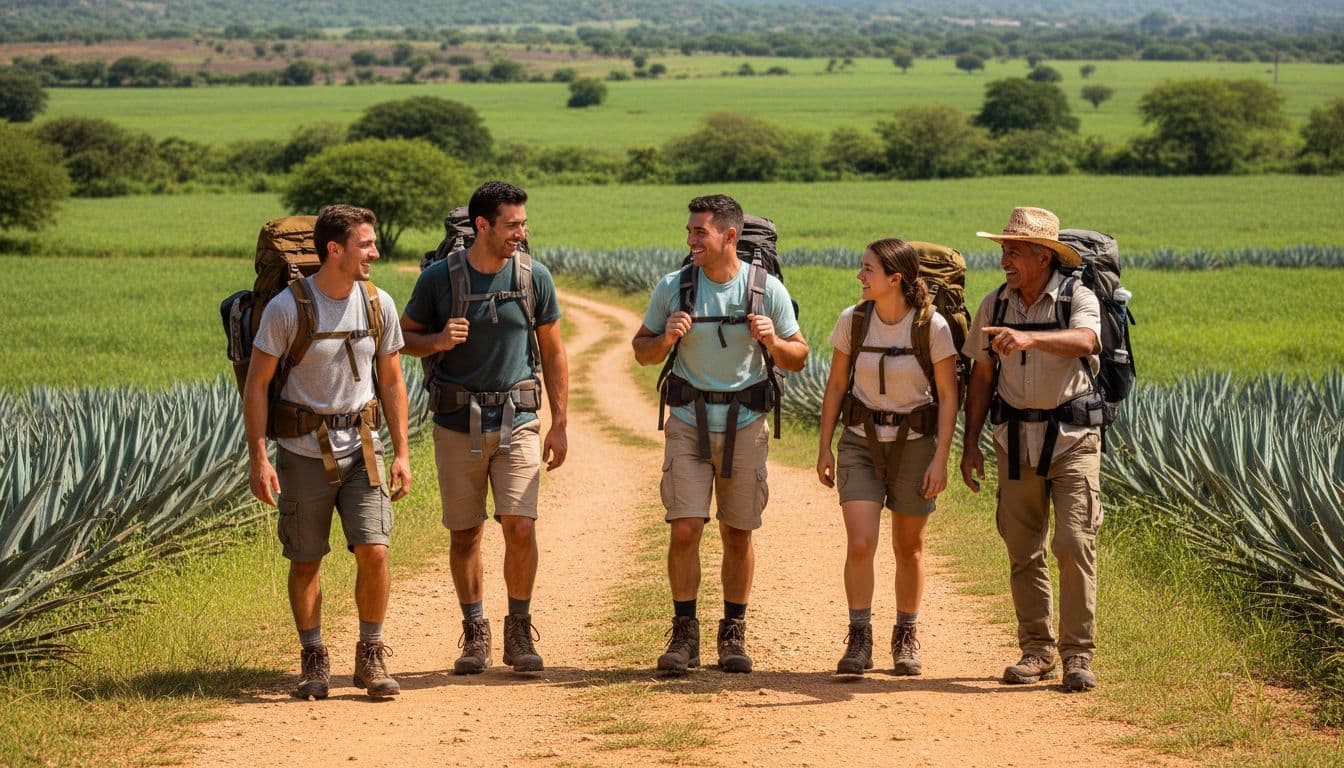
Carry only the cash you need for the day, keep the rest locked away, and avoid flashing phones, jewellery, or thick wallets. Petty theft is more common than dramatic danger. The same goes for transport. If you hire a car, avoid night driving on unfamiliar rural roads, and if something feels off, trust that instinct and leave.
It also helps to keep one person at home updated with your route, your host details, and your check-in times. A quick message each evening is enough. Before you fly, check the latest FCDO advice for Mexico, Guatemala safety guidance, or the page for your destination country. Advice can change quickly, especially near borders or in certain states and provinces.
Do not assume that rural means unsafe. Many village stays feel calmer than busy city districts. What matters is who you book with, how you travel, and whether the route sits in an area with current warnings. Good travel insurance matters too, because remote trips may need medical transport if something goes wrong. Check health updates before departure, pack insect repellent, and speak to your GP or travel clinic if you need vaccine advice.
A guided village visit with a trusted host is often safer than trying to improvise in an unfamiliar place.
Respect local culture without feeling nervous about getting it wrong
You do not need to perform confidence. You just need to be polite, curious, and willing to follow the room. Most hosts know you are learning, and they usually appreciate effort more than perfect behaviour. A few words of Spanish go a long way, especially "hola", "gracias", "por favor", and "con permiso".
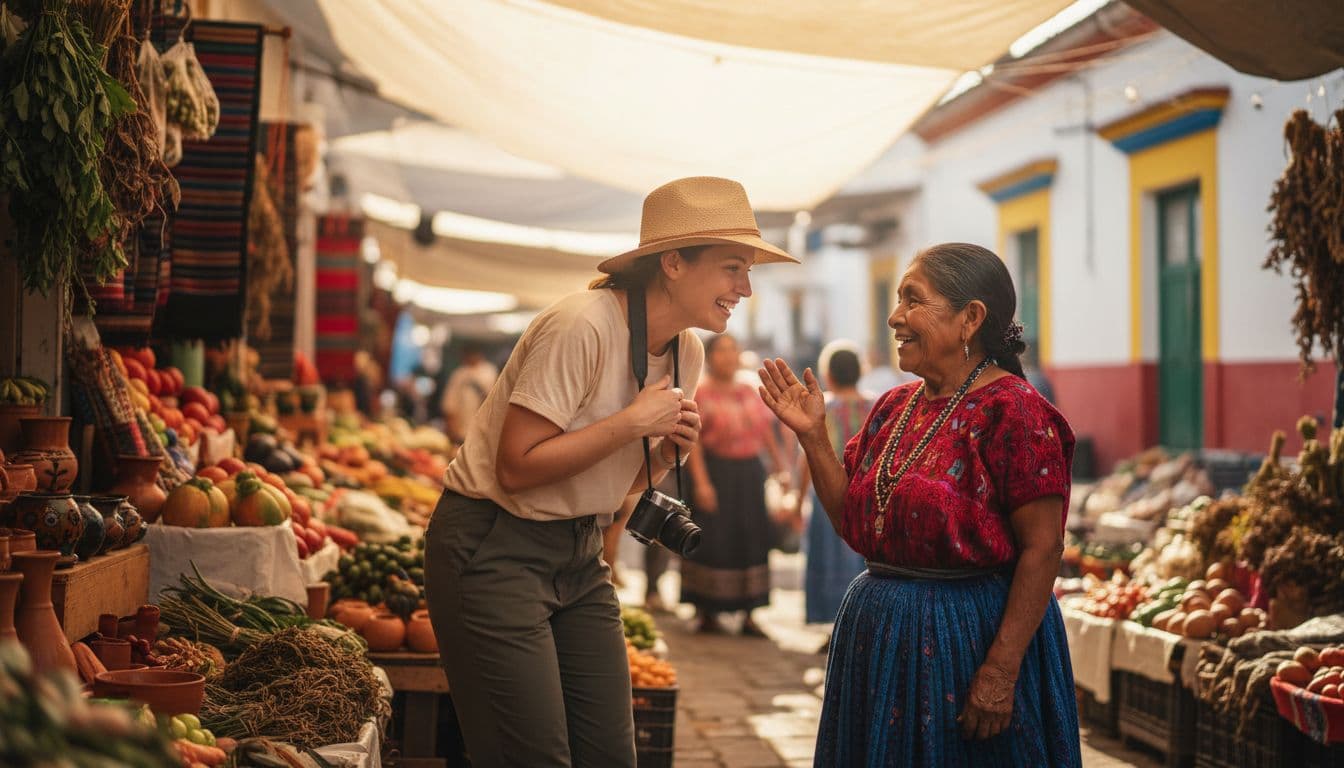
Start with the basics. Ask before taking photos, especially of people, homes, markets, children, ceremonies, and sacred places. In many communities, that one small question changes the tone at once. Guidance on visiting Indigenous communities with respect makes the same point clearly: permission comes first.
Dress with a bit of care when your host suggests it, particularly in villages, churches, or conservative areas. You do not need a costume, only some awareness. Also, try to listen more than you talk. If your host pauses, slows down, or changes the plan, go with it. Community tourism is not theatre on a timer.
A few habits make you easier to welcome:
- Greet people when you arrive.
- Follow your host's lead on food, shoes, seating, and timing.
- Keep your voice low in quiet places.
- Buy directly and fairly if crafts or food are offered.
- Ask questions with interest, not judgement.
If you are unsure, ask kindly. That feels far better than pretending you know. AFAR's respectful travel advice puts it well: every community has its own customs, so simple humility beats confidence every time.
How to spot a genuine community experience, not a tourist show
A real community tourism experience has a clear centre of gravity: local people lead it, own it, or benefit from it in an obvious way. If that part feels vague, keep looking. You should be able to find out who runs the activity, where your money goes, and why the experience exists beyond entertaining visitors.
A quick check helps before you book:
| What to check | Good sign | Warning sign | | | | | | Ownership | Local co-operative, family, or community group | Outside company with no clear local role | | Leadership | Residents guide or host the activity | Locals appear only for photos or performances | | Money flow | The operator explains community benefit | No detail on fees, wages, or impact | | Group size | Small groups, personal contact | Bus-load visits and rushed stops | | Cultural and nature care | Clear rules around photos, waste, wildlife, and sacred spaces | Culture treated as a show, nature treated as a backdrop |
You can also read the language used on the operator's site. If it talks about "real people" but never names the community, be careful. If every photo looks staged, if the group size is huge, or if the timetable crams in five villages in one day, it is probably built for volume, not exchange.
Better signs are refreshingly plain. Networks such as Co'ox Mayab explain that communities design and run the experience themselves. Local programmes like Merida's community tourism initiative also make the community benefit visible. That is what you want: small scale, local control, fair pay, and respect for culture and nature.
If you remember one rule, make it this one: book the experience where locals are hosts, not props.
Make your first trip count, without trying to do too much
Your first community tourism trip will go better if you shrink the plan. You do not need to see half a region to feel that you've had a real experience. In fact, the more you cram in, the more likely you are to spend your holiday in shuttles, check-ins, and route planning.
A better first trip has one clear centre. You arrive, settle, meet people, do one standout activity, and leave enough room for the place to breathe. That is how the trip starts to feel human rather than hectic.
A simple first-trip formula you can actually use
Use this four-part model and keep it tight:
- One arrival city
- One community base
- One signature activity
- One free day
That is it. Simple works.
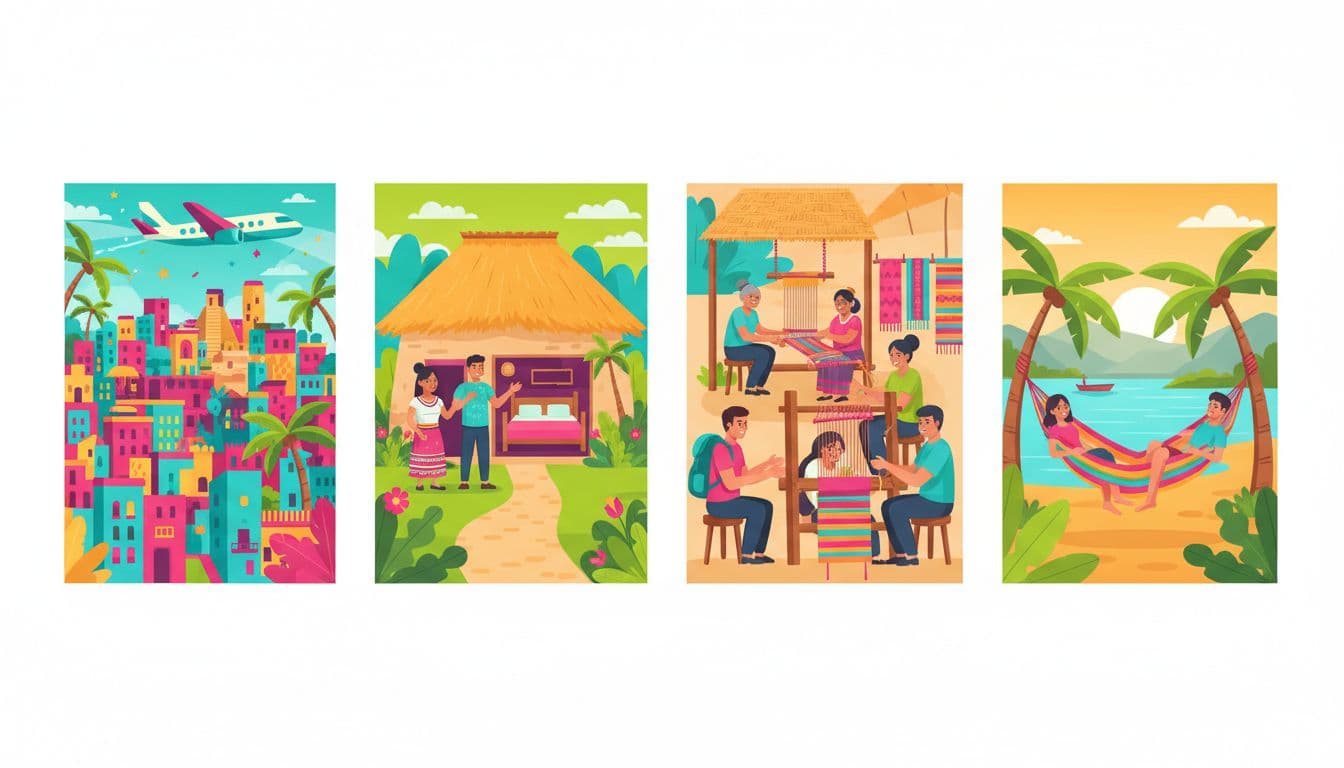
Start with one arrival city that is easy to reach and easy to recover in. Oaxaca City, Antigua, or San Jose all make sense because you can land, sleep well, and sort yourself out before heading anywhere smaller. If you need a quick sense of how manageable a short Oaxaca stay can be, this 3-day Oaxaca guide shows how much you can do without overloading the days.
Next, choose one community base and stay put. That might be a village guesthouse, a family-run eco-lodge, or a town with access to one nearby community project. You are not trying to collect stamps. You are giving yourself time to learn names, notice details, and settle into the rhythm.
Then book one signature activity. Make it the thing you will remember most. A weaving workshop in a Zapotec village, a coffee visit near Lake Atitlan, or a guided wildlife trip with local residents is enough to anchor the whole holiday. One strong activity has more weight than four rushed ones.
After that, protect one free day. This matters more than it sounds. A free day gives you space to rest, return to a market, sit in a square, or say yes to something small and local. That is often when the trip starts to click.
If your plan fits on a small note and still feels exciting, you are probably doing it right.
A first route might look like this: fly into Oaxaca, stay in the city or one nearby village base, do one weaving or cooking experience, then keep one day open. The same logic works in Guatemala or Costa Rica as well. You do not need a grand route. You need one good base and one good reason to be there.
That is what makes the trip feel possible. You book less, move less, and get more from each day.
FAQ
If you still have a few practical questions before booking, that's a good sign. Community-based tourism sounds simple, but your first trip is easier when you know what it is, what to expect, and how to choose well.
The short version is this: you want experiences led by local people, with clear benefits for the community, fair expectations, and respect on both sides. The answers below keep it plain and useful.
What is community-based tourism, and what is the core idea?
Community-based tourism, often shortened to CBT, is travel shaped by the people who live in the place you visit. You might stay in a family-run guesthouse, join a village guide, take part in a workshop, or visit a co-operative. The key point is local control.
At its best, CBT keeps more income, decision-making, and pride in local hands. That matters because you are not just buying an outing. You are joining an experience that the community has chosen to offer on its own terms.
What are the main elements of community-based tourism?
Most strong CBT experiences share the same building blocks. Once you know them, it gets much easier to spot the real thing.
- Local people own, lead, or co-manage the experience.
- Visitors join activities tied to real daily life, culture, or nature.
- The income has a clear local benefit, such as jobs, training, conservation, or support for co-operatives.
- Group sizes stay small enough for genuine contact.
- Hosts set rules around behaviour, photos, wildlife, and sacred spaces.
If those pieces are missing, you may be looking at a standard tour dressed up with better marketing.
What are the benefits of community-based tourism?
For you, the biggest benefit is a trip that feels more human. You learn faster, ask better questions, and remember more because the experience has texture. A meal, a forest walk, or a weaving lesson means more when the people involved are sharing their own knowledge.
For the community, the benefits can be direct and practical. Local tourism programmes in Mexico are backing artisan groups, bee farms, and eco-routes that create income closer to home, as shown by Merida's community tourism programme. Good CBT can also support cultural continuity and nature protection, because both become worth caring for in ways that pay fairly.
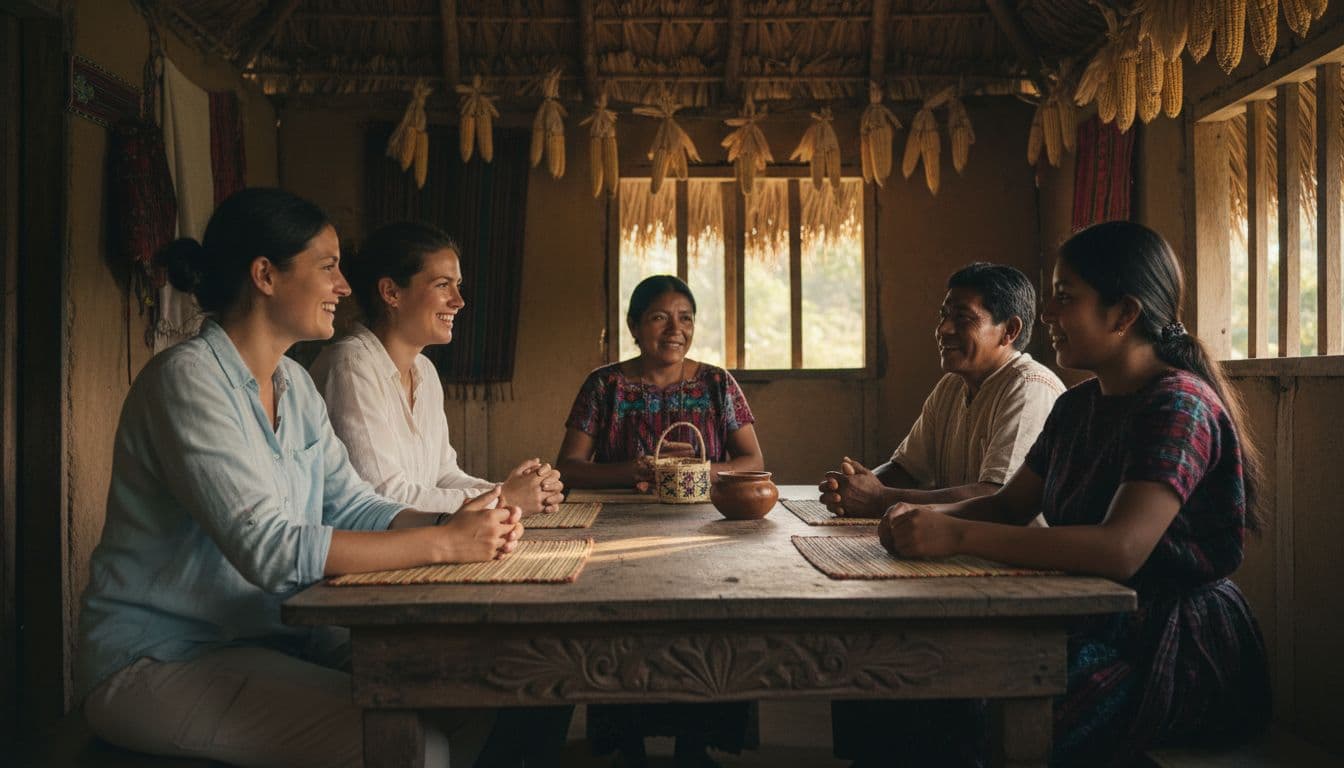
How can you make a positive impact when taking part?
Start small and stay respectful. You do not need to arrive like a charity project. You only need to be a good guest who pays fairly, listens well, and follows the host's lead.
A few habits go a long way:
- Book with community-led or transparent local operators.
- Buy crafts and food directly from the people offering them.
- Ask before taking photos.
- Keep water use, waste, and noise low.
- Learn a few basic Spanish phrases, or local greetings where appropriate.
That kind of care is simple, but it changes the tone of the whole visit.
Is community-based tourism safe?
Usually, yes, when you choose carefully. In fact, guided local experiences are often one of the safer ways to visit rural areas because your hosts know the place, the routes, and the current conditions. Recent 2026 travel guidance also points to group travel with local guides as one of the safer ways to travel in the region, with Costa Rica and Panama remaining the easiest choices overall for cautious first-timers.
That said, country and location still matter. Costa Rica and Panama are generally easier for first trips, whilst Guatemala, Nicaragua, and parts of Mexico need more care in route planning. Use trusted operators, avoid wandering at night, and keep your itinerary focused on places already known for welcoming visitors.
A well-run local tour in a known visitor area is usually safer than trying to improvise on your own.
Where can you find these experiences?
You will usually find them in places already mentioned in this guide, such as Oaxaca, Lake Atitlan, Antigua, Monteverde, Tortuguero, Granada, and parts of Panama. The trick is not only where, but who with.
Look for community networks, co-operatives, and local social enterprises with clear information about ownership and benefit. For example, RedTuri in Panama links travellers with Indigenous tourism communities, whilst Guate4you in Guatemala focuses on community-led experiences with Indigenous partners. Direct booking is often the best option when it is available and clear.
What should you expect during a CBT experience?
Expect a trip that feels more personal and a little less polished than a resort excursion. That is usually the whole point. Timings may be looser, groups smaller, and conversation more central to the day.
You might cook, walk, paddle, weave, taste local produce, or sit and talk more than you expected. Sometimes the simplest moments stay with you longest. If you arrive wanting a perfect script and constant speed, you may miss what makes CBT special. If you arrive curious and patient, you will probably love it.
What cultural protocols should you respect during visits?
The basics matter most. Greet people, dress with a bit of care where appropriate, and ask permission before photographing people, homes, ceremonies, or sacred places. Also, follow the host's lead on shoes, seating, food, and timing.
If something is not for visitors, accept that straight away. You are a guest, not an exception to the rule. This matters even more in Indigenous communities, where cultural boundaries can be clear for good reason.
What mindset should you bring?
Bring curiosity, patience, and humility. Leave behind the idea that every experience has to be slick, fast, or built around you. Community-based tourism works best when you are present enough to notice the pace, the context, and the people.
That mindset changes everything. You stop treating the day like a checklist and start treating it like a shared experience. Then the trip opens up.
How should you prepare for a community-based tourism trip?
Preparation is usually light, but it matters. Read about the community or operator, confirm what is included, and ask about transport, meals, payments, and photo rules before you go. For rural visits, pack practical basics such as sun protection, insect repellent, a reusable bottle, a rain layer, cash, and shoes you can walk in.
It also helps to prepare mentally. A CBT day may run on local rhythm rather than your usual schedule. If you can stay flexible, you will enjoy it more.
How do you choose ethical or community-led operators?
Look for operators who tell you who runs the experience, who benefits, and how. If that information is vague, move on. You want names, local partnerships, small groups, and clear respect for culture and nature.
A quick comparison helps:
| What to look for | Good sign | Red flag | | | | | | Ownership | Community group, family business, co-operative | No clear local role | | Group size | Small and personal | Large, rushed groups | | Money flow | Benefit is explained plainly | No detail on impact | | Tone | Respectful, specific, transparent | Generic claims about "authenticity" |
If you want a wider starting point, SustainableTrip.org lists tourism businesses recognised through sustainability standards and trusted recommendations in Latin America.
What are the top tips for first-time CBT travellers?
Keep your first trip simple. You do not need the most remote homestay or the most complex route to have a meaningful experience. Start with a place that is easy to reach, book one strong community activity, and leave breathing room in your plan.
These tips make the biggest difference:
- Pick one country for your first trip.
- Base yourself somewhere easy, such as Oaxaca, Antigua, or Monteverde.
- Book one or two quality experiences, not four rushed ones.
- Choose operators with clear local leadership.
- Show up ready to listen, not to perform expertise.
If you follow those basics, your first community tourism trip is far more likely to feel warm, grounded, and worth repeating.
Conclusion
Your first community tourism trip in northern Latin America doesn't have to feel hard to plan. If you start with one approachable place, such as Oaxaca, Antigua, or Monteverde, the whole idea becomes much easier to picture. Then you can book a couple of local-led experiences, keep your route simple, and give yourself enough time to slow down and actually enjoy where you are.
That is the real takeaway. The best first trip is not the busiest one. It is the one that gives you honest contact, clear logistics, and a better sense of the people behind the place. When you travel with respect, ask questions, and choose community-run stays or tours, your visit feels warmer and more memorable.
So trust your own style as you plan. Pick the destination that fits you best, keep the pace light, and start building a trip that feels personal from the first day.