
How to Make Money with Eco-Friendly Travel

Green travel can do more than trim your costs, it can become a proper income stream. If you love seeing new places but don't want your trips to rely on cheap, high-impact habits, there are smarter ways to fund the road.
In 2026, travellers are spending more on lower-impact stays, local guides and honest advice. That opens the door to low-impact travel income through content, remote work, green tourism side hustles and well-chosen work exchanges.
You don't need a giant audience or a big budget. You need a clear offer, useful skills and a way to keep your costs low whilst you build.
Why green tourism is turning into a real income opportunity
Sustainable travel is no longer a fringe idea. Recent 2026 travel reporting shows that 85% of travellers say sustainability matters to them, and many are choosing quieter places over packed hotspots. People want trips that feel personal, support local people and avoid waste.
That shift matters because buyers now pay for meaning, not only convenience. A guided wildlife walk, a carbon-light rail itinerary or a trusted review of an eco-hostel can all earn money. Some income is active, such as guiding or freelance work. Some is semi-passive, such as affiliate links, digital guides and evergreen travel content.
What makes a travel income idea genuinely eco-friendly?
An eco-friendly travel idea should lower harm in simple, visible ways. It should cut waste, back local businesses, avoid needless flights where possible, and respect wildlife and landscapes.
Good examples include rail-first trip planning, refill-friendly packing guides, walks led by local residents, and small-group stays in locally owned guesthouses. Poor examples include churn-and-burn city breaks built around bargain flights, wildlife encounters that stress animals, or "green" products made to be thrown away after one trip.
The kinds of travellers who spend on sustainable experiences
The audience is broader than many people think. Solo travellers want easy, safe choices. Couples often pay for slower, better-quality stays. Families like low-stress options with kitchens, nature and clear values. Digital nomads want reliable Wi-Fi, longer stays and a smaller footprint.
These travellers don't want preaching. They want honesty, good planning and proof that their money helps the place they visit. If you can offer that, people will pay.
The best ways to make money from eco-friendly travel
The strongest green tourism side hustles are practical. They use skills you already have, or can build fast, and they don't depend on luxury budgets.
Turn your travel photos, videos and stories into paid content
If you already take decent photos or short clips, you have something to sell. Local tourism businesses, stock sites and small brands often need real travel images, not polished ad shots. Slow travel also gives you better material because you have time to notice what others miss.
A blog, newsletter, TikTok, Instagram page or podcast can also earn. Ads are only one route. Many creators make more from city guides, route maps, packing lists and niche sponsorships. A small audience can still pay well when trust is high. If you become known for UK staycations by train, plastic-free packing or budget eco-travel in national parks, your content starts to work harder.
Use affiliate links to recommend eco-hotels, tours and gear
Affiliate income works best when your advice is specific. Recommend the train pass you used, the refillable bottle that survived six months on the road, or the booking site that screens for responsible stays. Don't pile in links for products you haven't tried.
If you want a sense of what's available, this list of eco-friendly affiliate programmes for 2026 shows how broad the space has become. You can place those links in blog posts, email newsletters, YouTube descriptions or social captions. Always label affiliate links clearly, because travel readers can spot fake enthusiasm a mile off.
Offer eco-tours, walking routes and local experiences
You don't need to run a safari camp to earn from sustainable travel. Many people start with simple, local experiences. That could mean a heritage walk in York, a birdwatching morning in the Norfolk Broads, a litter-pick and coastal photography session in Cornwall, or a foraging workshop with a trained leader.
Start-up costs can be low if you use knowledge instead of gear. A clear route, good timing, public liability cover and a simple booking page go a long way. Small groups are often easier to manage, better for nature and more appealing to guests who want calm, not crowds.
Find remote jobs that fit a low-impact travel lifestyle
For many travellers, remote work is the steadiest option. Freelance writing, design, social media support, virtual assistance, editing and customer support all fit a lower-impact travel style. They pay you for your skill, not your location, so you can stay longer in one place and cut down on transport.
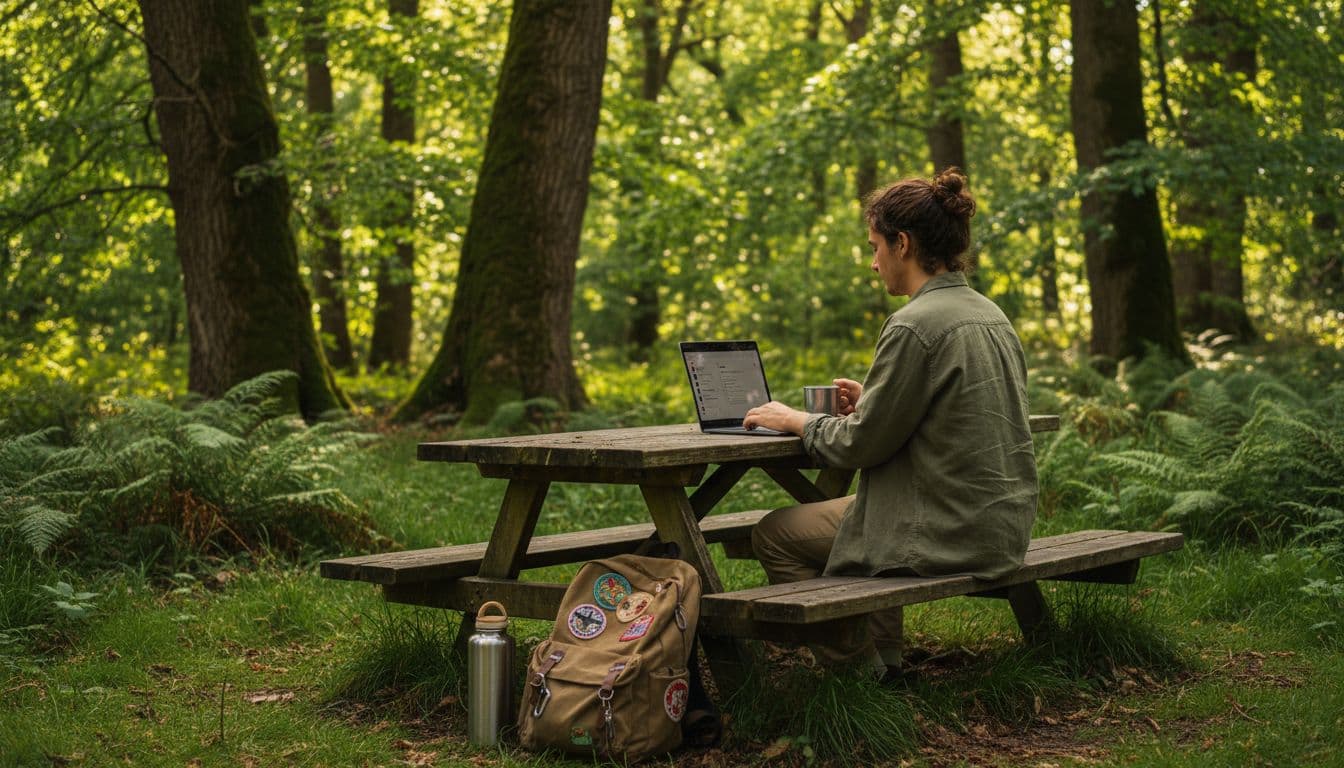
This also supports eco-friendly travel savings. A month in one town usually costs less than four rushed stops. You can walk more, cook more and build better local contacts. If you're exploring eco travel digital nomad jobs, these remote digital nomad job ideas give a useful starting point. Keep one point in mind, though: check visa rules before taking paid work abroad, and track your income properly for HMRC.
How to cut travel costs so your income goes further
Earning matters, but spending less matters too. If you can trim your weekly costs, you buy yourself time to grow slower income streams.
Slow travel usually wins here. Off-season stays are cheaper. Shared kitchens reduce food spend. Good public transport cuts petrol, parking and short-haul flights. Free Wi-Fi and longer bookings also help when you're building remote income.
Use work exchanges and volunteering to cover accommodation
A sustainable travel work exchange is simple. You give a few hours of help each day, and in return you get a bed, and sometimes meals. The work might be reception help in an eco-hostel, gardening on a small farm, trail maintenance or support on a conservation project.
Platforms such as Workaway's sustainable project listings and Worldpackers make these options easier to find. For eco volunteering for free accommodation, the best placements are clear about hours, tasks and what you receive.
Free stays only help if the terms are clear before you arrive, including hours, meals, days off and insurance.
Choose transport and stays that keep costs and emissions lower
Trains, coaches, bike hire and lift shares often beat last-minute flights on both price and carbon. In the UK, rail-based trips also make content easier. You can write, edit or plan on the move, and stations drop you near town centres.
The same logic applies to where you sleep. Guesthouses, eco-hostels, bunkhouses and simple cabins with shared kitchens usually cost less than chain hotels. Slower stays also help you network, find repeat clients and discover better local stories.
Set yourself up to earn more with a simple green travel plan
You don't need five income streams. One or two, matched to your travel style, is enough to start.
Pick one niche, one audience and one main offer
A tight niche helps people remember you. Budget eco-travel in the Lake District, car-free city breaks, plastic-free packing, wildlife-friendly family trips, or sustainable UK staycations all work better than "travel tips" on their own.
Then choose one main offer. That could be a paid itinerary, a walking tour, a photo pack, affiliate-led gear guides or freelance content for tourism businesses. Clear focus makes your work easier to sell.
Build trust before chasing bigger earnings
Travel buyers want the truth. Share real costs, not fantasy budgets. Say when a stay was noisy, when a train route was awkward, or when an "eco" claim looked thin. That honesty brings repeat readers and better word of mouth.
It also helps to work with ethical partners. If you want an example of a responsible travel booking partner, this affiliate programme for ethical adventures shows how some brands now tie earnings to trips that support communities and ecosystems.
Avoid common mistakes that waste time and money
The biggest error is doing too much at once. A blog, YouTube channel, newsletter, freelance work and tours might sound exciting, but it usually leads to weak results. Pick one main income stream and one support stream.
Another mistake is copying creators whose style doesn't match your budget or values. Also, watch your hidden costs. Data plans, insurance, platform fees and constant transport can eat small earnings fast. Finally, don't claim a trip is sustainable unless you can show why. Start small, track what works and improve as you go.
Conclusion
Eco-friendly travel can pay, but the strongest results come from simple choices. Keep your costs low, choose one clear income method and build skills that travel well.
That might mean selling honest content, taking remote client work, hosting a local nature walk or trying eco-conscious earning through a good work exchange. The point is to begin with something real, not perfect.
One small step today is enough. Book the slower train, sketch your first offer, or apply for the stay that cuts your costs and buys you time.
FAQ
Can you really earn money from sustainable travel without being an influencer?
Yes. Plenty of people earn through freelance work, guiding, affiliate income, photography and digital products. A small, trusted audience often converts better than a huge one.
Is eco volunteering a real way to save money?
It can be, if the placement is fair. Good exchanges reduce accommodation costs and sometimes food costs too. Read reviews, confirm hours and avoid vague listings.
Which green travel income option is the most stable?
Remote work is usually the most stable because it pays for skills on a regular basis. Content and affiliate income can grow well, but they often take longer.
Do I need to travel abroad to make this work?
No. UK-based green travel can work brilliantly. National parks, coastal paths, rail breaks and local heritage experiences all offer room for income without long-haul flights.